

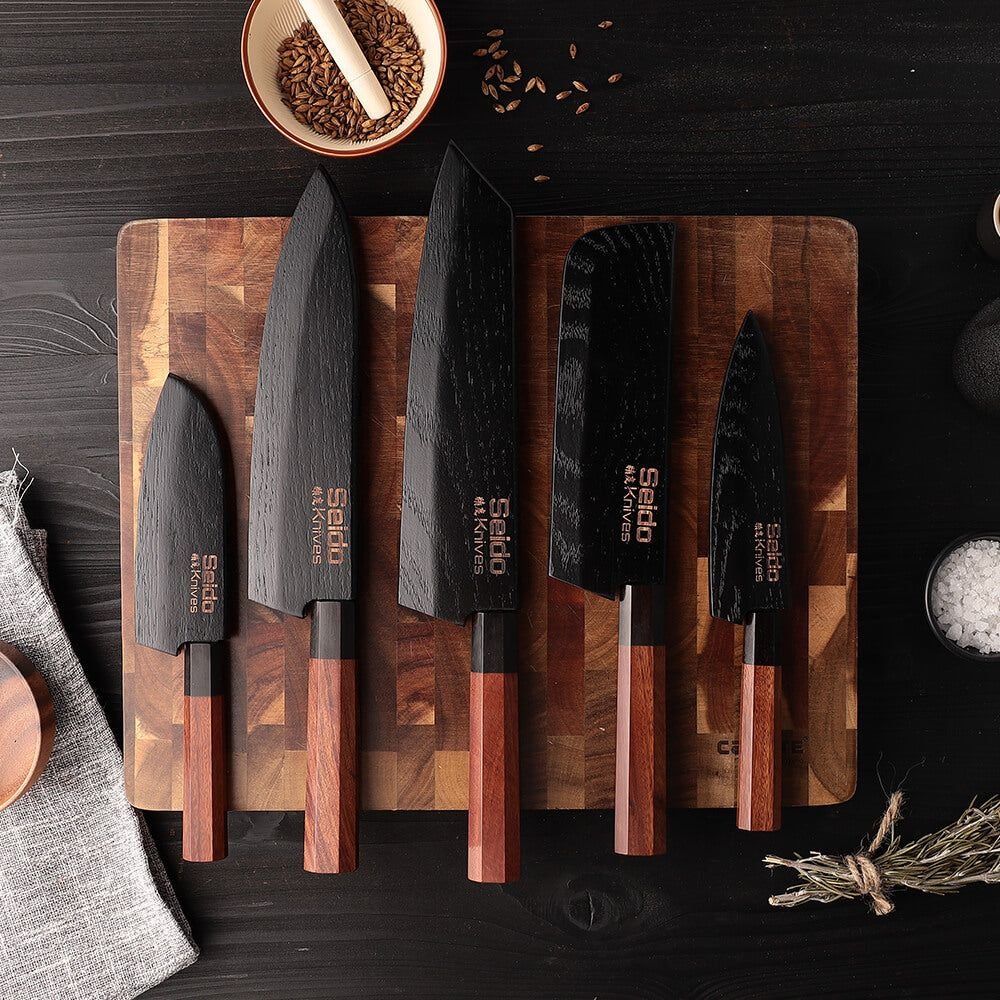
Carbon steel kitchen knife are renowned among chefs and cooking enthusiasts for their sharpness, precision, and unique characteristics. This article delves into the features that set carbon steel apart from other knife materials, including its historical significance, practical advantages, maintenance needs, and why it remains a favorite in both professional and home kitchens.
Table of Contents
Understanding Carbon Steel as a Blade Material
For serious chefs, mastering the Carbon Steel Kitchen Knife begins with understanding how carbon content affects sharpness and edge retention. A Carbon Steel Kitchen Knife has long held a place of respect among chefs and knife enthusiasts due to its unique qualities as a blade material. At its core, carbon steel is a blend of iron and carbon, where the carbon content typically ranges from 0.5% to 1.2%. This elevated percentage significantly enhances the steel’s hardness, making a Carbon Steel Kitchen Knife ideal for forging sharp, resilient edges that stay true through precise slicing, chopping, and detailed work. Alloying elements such as vanadium can be added to increase toughness and refine the grain structure, resulting in a more consistent edge. Manganese may also be present, contributing to additional strength and wear resistance, which is especially valued during demanding kitchen tasks.
Unlike stainless steel, which relies on chromium for corrosion protection, a Carbon Steel Kitchen Knife contains far less chromium—usually under 13%—making it more vulnerable to rust and requiring conscientious maintenance. However, many cooks consider this trade-off worthwhile thanks to its superior edge retention and the ease with which the blade can be sharpened, even by hand on a whetstone. Compared to high-carbon stainless steels, a Carbon Steel Kitchen Knife offers greater sharpness potential and a finer cutting edge, but demands extra vigilance against moisture.
Over time, a Carbon Steel Kitchen Knife naturally develops a patina—a thin, dark protective layer that acts as a barrier against rust while also reflecting the knife’s history of use. This evolving patina is cherished by professionals and passionate home cooks alike, symbolizing both performance and character.
The combination of exceptional sharpness, tactile feedback during cutting, and a living surface that ages gracefully has cemented the Carbon Steel Kitchen Knife as a premier choice among culinary experts. Its enduring appeal lies in the unmatched control and precision it offers, making it the material of choice for cooks who demand artistry, durability, and reliability from their primary kitchen tool.
The Historical Influence of Carbon Steel Knives
The prominence of the Carbon Steel Kitchen Knife today is deeply rooted in the rich traditions of global knife-making centers, where regional practices and centuries of refinement shaped both the artistry and the functionality prized in modern blades. In Europe, cities like Sheffield in England, Thiers in France, and Solingen in Germany each emerged as dynamos of cutlery production, harnessing local resources and forging techniques to craft durable, carbon-rich blades. Sheffield became famous in the 18th and 19th centuries for its finely balanced and long-lasting knives, while Thiers developed signature forging styles and blade geometries suited to French culinary precision. Likewise, Solingen—known as “The City of Blades”—perfected tempering methods that led to widespread adoption of hard, sharp kitchen blades across central Europe, influencing what would later become the modern Carbon Steel Kitchen Knife.
Many culinary professionals believe that mastering the Carbon Steel Kitchen Knife is essential for achieving clean, precise cuts in high-level cuisine. In Japan, the evolution from swordsmithing to kitchen knife craftsmanship marked a pivotal transition in history. Regions such as Sakai, once famed for samurai swordsmiths, shifted their expertise during times of peace—particularly the Edo era—to produce extraordinary kitchen knives for merchants, home cooks, and sushi masters. Techniques like differential hardening and layered steel construction, originally developed for katana, were reimagined for culinary blades and gave birth to iconic knife types such as the yanagiba, deba, and usuba. Each style highlights regional food traditions, emphasizing single-bevel precision and the delicacy that defines Japanese cuisine—qualities now closely associated with the modern Carbon Steel Kitchen Knife.
Through centuries of cross-cultural exchange, innovation, and craftsmanship, the legacy of these historic knife-making centers persists. Their artisanal methods and nuanced blade designs continue to inspire contemporary bladesmiths and shape the performance characteristics of the Carbon Steel Kitchen Knife used in today’s professional and home kitchens.
Performance and Advantages in Culinary Use
The hallmark of carbon steel kitchen knives lies in their remarkable performance, setting them apart as indispensable tools for chefs who demand both precision and versatility. The inherent hardness of high-carbon steel allows these knives to be honed to an exceedingly acute edge, often sharper than many stainless-steel counterparts can achieve. This razor-thin edge is not merely for show; it translates into exceptional control over each cut, making tasks such as julienning carrots, chiffonading herbs, or deboning poultry smoother and more satisfying.
A particular advantage becomes evident in delicate preparations—think of slicing through ripe tomatoes without crushing the flesh, or portioning sushi-grade fish with pristine accuracy. The fine grain structure of carbon steel lets chefs create micro-serrated edges during sharpening, which improves both the push-cutting and rocking motion so frequently essential in Western and Japanese cooking techniques. For instance, when preparing sashimi, the blade glides effortlessly through the fish, preserving texture and presentation. Carbon steel’s feedback, or the tactile connection felt through the blade during a cut, affords a sense of control particularly prized for intricate garnishes or thinly slicing garlic, where a dull or thick blade would bruise instead of slice.
Durability in edge retention further distinguishes carbon steel knives. Frequent honing re-aligns, rather than grinds away, the edge, so the keen sharpness persists through extended prep sessions—crucial when brunoising vegetables for mirepoix or trimming sinew from a beef tenderloin. The keen sensitivity and responsive nature of carbon steel foster an intimate relationship between cook and blade, supporting highly skilled tasks and elevating simple ingredients into artful dishes.
Maintaining and Caring for Carbon Steel Knives
When it comes to fine slicing and delicate textures, Mastering the Carbon Steel Kitchen Knife for Precision Cooking ensures unmatched performance compared to stainless alternatives. Proper care and maintenance are essential to unlocking the full lifespan and potential of a carbon steel kitchen knife. The chemistry that gives carbon steel its keen edge also makes it more susceptible to rust and discoloration unless given diligent attention. After each use, wash the blade by hand using mild soap and warm water. Avoid dishwashers and soaking, as prolonged exposure to moisture can quickly foster rust. Immediately after washing, dry the blade thoroughly with a soft towel, paying special attention to the spine and the area where the blade meets the handle, as water tends to accumulate there.
To further protect the knife, lightly apply a food-safe oil—mineral oil is an excellent choice—on the blade before storing. This forms a barrier against humidity and oxygen, the chief culprits of corrosion. Over time, you’ll notice the blade developing a dark, bluish-gray patina, especially after cutting acidic foods like onions, tomatoes, or citrus. Far from being a flaw, this patina is a natural protective layer that reduces reactivity and helps prevent rust. If you notice an initial metallic taste when preparing acidic ingredients, rest assured it will diminish as the patina matures.
Sharpening techniques play a major role in Mastering the Carbon Steel Kitchen Knife for Precision Cooking, especially when using whetstones to maintain a razor edge. Sharpening is another maintenance pillar; frequent honing with a fine steel and periodic sharpening with a whetstone will maintain the razor edge that makes carbon steel knives so prized. Avoid using glass, stone, or overly hard cutting boards, as these can quickly dull the blade. Never store a carbon steel knife loosely in a drawer. Instead, use a wooden knife block, magnetic strip, or blade guard to keep it safe and dry.
Common mistakes include leaving the knife wet, neglecting oiling, and improper storage, all of which can shorten its life. Consistent care will ensure your carbon steel knife remains a trusted, nimble tool for years, gracefully acquiring character while retaining exceptional performance.
Is a Carbon Steel Knife Right for You?
Is a Carbon Steel Kitchen Knife the right tool for your culinary ambitions? Choosing between a Carbon Steel Kitchen Knife and other blade materials—such as stainless steel or ceramic—requires thoughtful consideration of your cooking habits and personal preferences.
A Carbon Steel Kitchen Knife is prized for its razor-sharp edge, ease of resharpening, and unmatched tactile feedback during precise prep work. However, these strengths come with the need for attentive care and a willingness to embrace the evolving patina that naturally forms on the blade over time.
The decision depends on both practical and personal preferences. Ask yourself: Do you enjoy maximum sharpness for tasks like sushi, herbs, or delicate protein slicing? Do you appreciate routines like honing, drying, and oiling your tools after every use?
If so, a Carbon Steel Kitchen Knife may be the ideal match for your cooking style. Its responsiveness and blade sensitivity provide control that many chefs find deeply satisfying.
Compared to stainless steel knives, a Carbon Steel Kitchen Knife delivers superior sharpness and a more responsive edge, but requires extra vigilance against rust and discoloration. Ceramic knives require almost no maintenance, but cannot match the versatility or tactile feedback that passionate cooks often look for.
If you value craftsmanship and don’t mind a little upkeep to keep your blade performing at its best, a Carbon Steel Kitchen Knife can transform your kitchen experience. If you prefer convenience, low maintenance, or live in a very humid environment, a modern stainless-steel blade may be more practical.
Choosing the knife that aligns with your cooking style and maintenance habits ensures long-term satisfaction and performance.
Conclusions :
In summary, carbon steel kitchen knives offer unmatched sharpness and control for those willing to care for them properly. While they require more maintenance compared to stainless steel, their performance and lasting legacy in culinary history make them a cherished tool for professionals and dedicated cooking enthusiasts. With the right upkeep, a carbon steel knife is a kitchen investment that repays in precision and pleasure.
For more tools that upgrade your cooking , check out our best kitchen tools and gadgets reviews