


Countertop ice maker solutions have transformed home entertaining, travel, and everyday convenience in 2024. Whether you need crystal-clear cubes for cocktails, chewable nugget ice for iced coffees, or portable options for camping and RV trips, this guide explains everything you must know—without skipping the tough truths. Let’s break down what sets these compact appliances apart so you get more ice for your money, avoid frustrating pitfalls, and buy smarter.
Key Takeaways
- Countertop ice makers vary widely in output, ice quality, features, and maintenance needs—know what matters most before you shop.
- New trends prioritize portable, rapid, and energy-efficient designs, but some persistent cleaning and durability complaints remain.
- Premium models offer self-cleaning, clear ice, and Wi-Fi, while midrange units balance speed, capacity, and price for most buyers.
- Understanding Countertop Ice Makers: What & Why
- How to Choose the Right Countertop Ice Maker in 2024 (Step-by-Step)
- Advanced Analysis: Pitfalls, Real Problems, and Smart Comparisons
- Conclusion
- FAQ
Understanding Countertop Ice Makers : What & Why .
Countertop ice makers are plug-and-play machines designed to produce ice rapidly and conveniently, without the installation or plumbing needs of built-in fridge dispensers. Unlike traditional freezer trays or expensive refrigerator repairs, these appliances offer anywhere from 13 up to 44 pounds of ice per day, producing bullet, nugget, or clear cubes on demand. Their surge in popularity comes from a combination of portability — many models weigh under 20 pounds and fit easily on kitchen counters or in RVs — and customizable ice for home bars, parties, and offices.
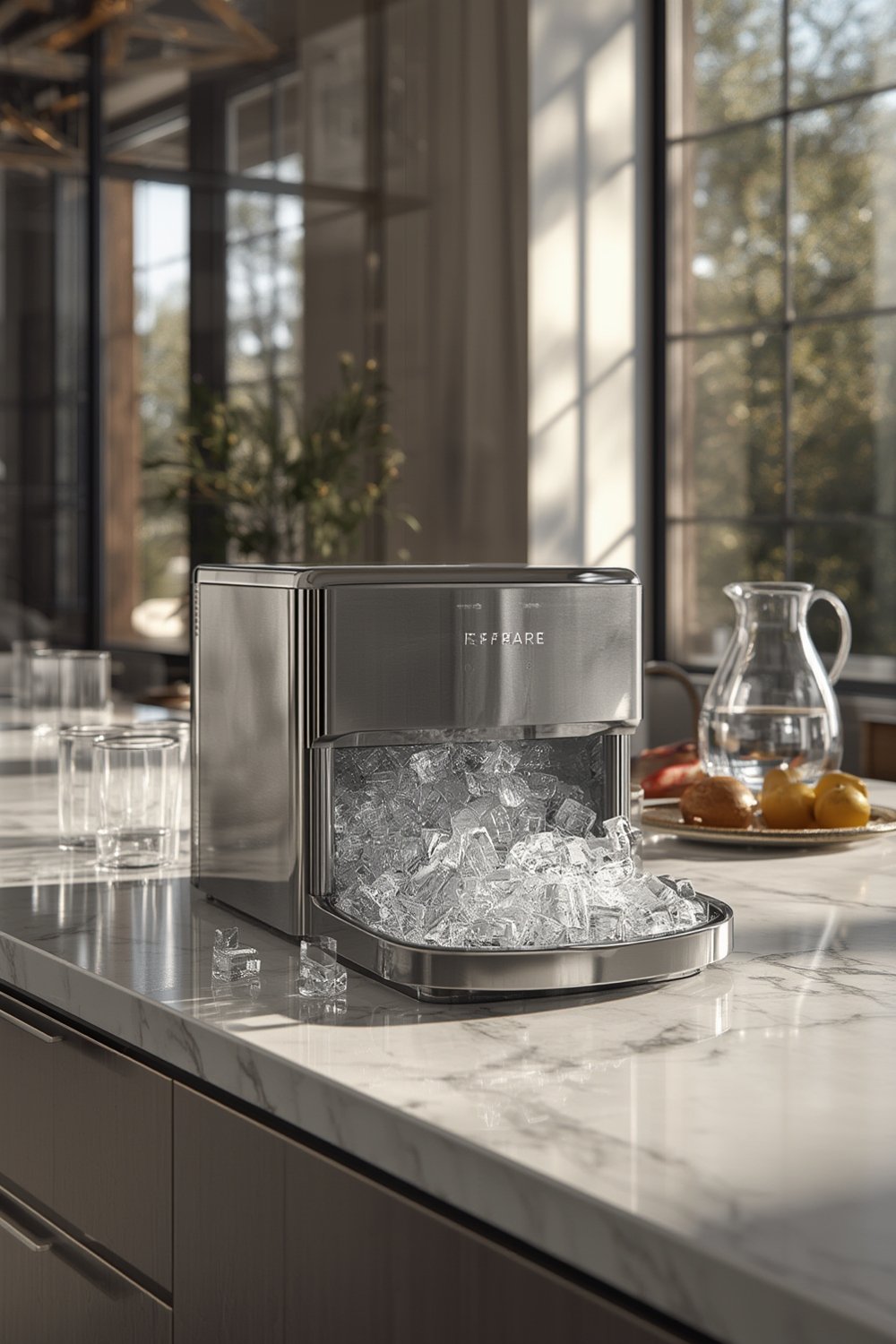
Leading brands like Frigidaire (EFIC189, EFIC452 XL), NewAir, nugget ice GE Profile Opal 2.0, and Kismile have focused on clear ice production, self-cleaning, adjustable cube sizes, and smart features such as timers and Wi-Fi.
Those seeking slow-melting cubes for cocktails and premium drinks will appreciate clear ice units, while nugget (“Sonic-style”) chewable ice has grown popular for soft drinks and health-conscious ice chewers.
Compared to refrigerator repairs or built-in replacements, a countertop ice maker is usually far less expensive and requires no dedicated plumbing. This makes it an obvious choice for renters, travelers, small families, and those wanting flexibility—or backup for busy kitchens or outdoor entertaining.
Want to dive deeper into other vital kitchen tools? See how manual food choppers are transforming effortless prep in our Manual Food Chopper Buying Guide.
How to Choose the Right Countertop Ice Maker in 2024 ?
Ready to buy? Use these practical steps to select the ideal countertop ice maker for your needs in 2024.
- Decide on Ice Type & Quality: For cocktails or upscale drinks, choose models offering clear, slow-melting cubes (like the Frigidaire EFIC452). If chewable or “Sonic” ice is your favorite, consider nugget ice makers such as NewAir or GE Opal 2.0 (source).
- Assess Ice Output: Most homes are well served with 26 lbs/day, but large gatherings or office kitchens might need closer to 40 lbs. Some premium models hit 44 lbs or more per day.
- Check Storage Capacity: Bins usually hold 0.8–2.4 lbs at a time. If you want continuous supply without overflow or constant emptying, look for larger-capacity bins.
- Review Size & Portability: Compact designs (as small as 9.84 x 15 x 16.5 inches and under 15 lbs) are perfect for RVs, tailgates, or apartments. Some like Kismile offer handles for easy mobility (source).
- Consider Features & Electricity: Self-cleaning, Wi-Fi, and timers add convenience but can raise costs. Energy efficiency saves on running costs. Notably, water filtration compatibility is missing in most models but can boost taste and lifespan.
- Factor in Maintenance & Cleaning: Self-cleaning units help, but machines still need regular manual draining and descaling. A removable drainage tube is a bonus.
- Balance Budget and Extras: In 2024, prices span from value models with rapid ice and two sizes (like Frigidaire EFIC189) to high-end, clear or chewable ice units with self-cleaning and larger output.
For more on creating specialty textures and homemade desserts, check out how the Ninja Creami compares to traditional ice cream makers!
Don’t forget to review warranty policies and support. Premium brands tend to offer better service and longer protection, especially if you plan heavy use.
Advanced Analysis : Pitfalls , Real Problems , and Smart Comparisons .
While the latest roundup of countertop ice makers touts rapid production, energy savings, and ultra-portability, several persistent pain points surface in real-world use.
- Noise: Some models, especially high-output ones, can be quite loud during operation—a problem in quiet spaces.
- Durability Issues: Metal and robust plastic builds last longer. Cheaper models with thin plastics or minimal insulation can break down with daily or heavy use.
- Actual Output vs. Claims: Marketing often lists “best case” daily output. Peak summer use, high room temps, or frequent opening can cut actual performance by 15–25%.
- Cleaning Hassles: Self-cleaning models help, but users still need to regularly empty and descale to prevent mold, especially with hard water or infrequent use.
- No Water Filtration: Most countertop ice makers don’t filter water. Use filtered water to avoid mineral deposits and water taste issues.
- Manual Refilling: Frequent top-ups are needed in all but the largest units (those with side reservoirs or connection kits). This can become inconvenient for continuous entertaining.
- Ice Melting: Because bins are not freezer-insulated, ice melts back into the reservoir—convenient for recycling, but means you need to use ice promptly.
| Feature | Countertop Ice Maker | Built-in Refrigerator Ice Maker |
|---|---|---|
| Price & Repair | $100–$600, far less than fridge repair/replacement | $400+ for repairs; full fridge upgrades cost thousands |
| Output per Day | 13–44 lbs | 8–12 lbs (typical fridge dispenser) |
| Portability | High – perfect for RVs, events, and backup use | Non-portable; fixed to fridge location |
| Installation | None required – just plug in | Needs plumbing and space configuration |
| Cleaning/Maintenance | Frequent manual attention—even with self-cleaning | Automated cleaning but can be difficult to repair |
| Ice Types | Varied: bullet, nugget, clear cubes | Mostly crescent or crushed ice |
For those passionate about specialty ice, discover more nugget ice hacks in our Nugget Ice Maker Buying Guide, including how to maintain perfect chewable cubes at home.
Love kitchen gadget comparisons? Our Ice Cream Maker Guide highlights smart choices for at-home dessert fans.

Conclusion :
A countertop ice maker offers rapid, customizable ice wherever you need it—from your kitchen to an RV or even an outdoor event. Today’s models combine speed, clever features, and portability. Just remember the downsides: bins are not true freezers, cleaning is still needed, and loudness might be an issue in tight spaces. For most, the convenience trumps these shortcomings, especially when choosing wisely for your lifestyle or business. Explore your options, weigh real-life pros and cons, and enjoy a steady supply of ice on demand. Ready to elevate your drinks and hospitality with a countertop ice maker? Compare features and find your best fit today.
Curious about other essential kitchen tools? See our comprehensive Guide to Mortar and Pestle Sets for more insights.
FAQ :
Do countertop ice makers need a water hookup?
No. Countertop ice makers use a refillable water reservoir—just add tap or filtered water as needed. Some high-capacity commercial units allow optional plumbing kits.
How long does it take to make a batch of ice?
Typical models produce the first ice batch in about 6–10 minutes, with bullet-shaped cubes. Clear ice and nugget models can take a few minutes longer per cycle.
Why is my ice cloudy instead of clear?
Cloudiness often comes from air bubbles or mineral deposits. Use pre-boiled or filtered water and regularly clean your machine for better clarity. Clear ice models are specially designed to minimize cloudiness (source).
Do self-cleaning cycles replace manual cleaning?
Self-cleaning cycles help flush the internals, but you must still wipe down, drain, and occasionally descale the ice maker for full sanitation, especially with hard water (source).
Can I use a countertop ice maker in my RV or camper?
Yes. Compact models are built for portability and work well in RVs and campers, especially those with handles and minimal power requirements (source).
[…] e-commerce making it easier to compare different ice maker types and models, homeowners, renters, and van-lifers are upgrading their setups for more control, less […]