

titanium cutting board claims frequently make headlines for their hygiene, durability, and modern kitchen appeal. But do they live up to the hype or are they simply a premium-priced trend? Here’s what you really need to know, based on facts, not just marketing.
Key Takeaways
- No recent, peer-reviewed lab data confirms titanium cutting boards outperform wood or plastic in antibacterial tests.
- Real-world use is mostly positive, but users report unique downsides like metallic sound and premium price.
- Certified, medical-grade titanium boards stand out for durability and odor resistance, but definitive hygiene advantages remain unproven.
- What Is a Titanium Cutting Board and Why Are People Interested?
- How to Choose and Use a Titanium Cutting Board: Actionable Guide
- Advanced Analysis & Common Pitfalls: Is Titanium Really Better?
- Conclusion
- FAQ
What Is a Titanium Cutting Board and Why Are People Interested?
A titanium cutting board is a kitchen surface made from certified, medical-grade titanium alloy. Unlike wood or plastic boards, titanium boards are designed for superior durability, rust resistance, and zero-porosity—meaning they do not absorb moisture, food juices, or odors. Manufacturers like Taima® market these boards for being non-porous, easy to clean, and possibly even antibacterial, although scientific proof of those claims is limited.
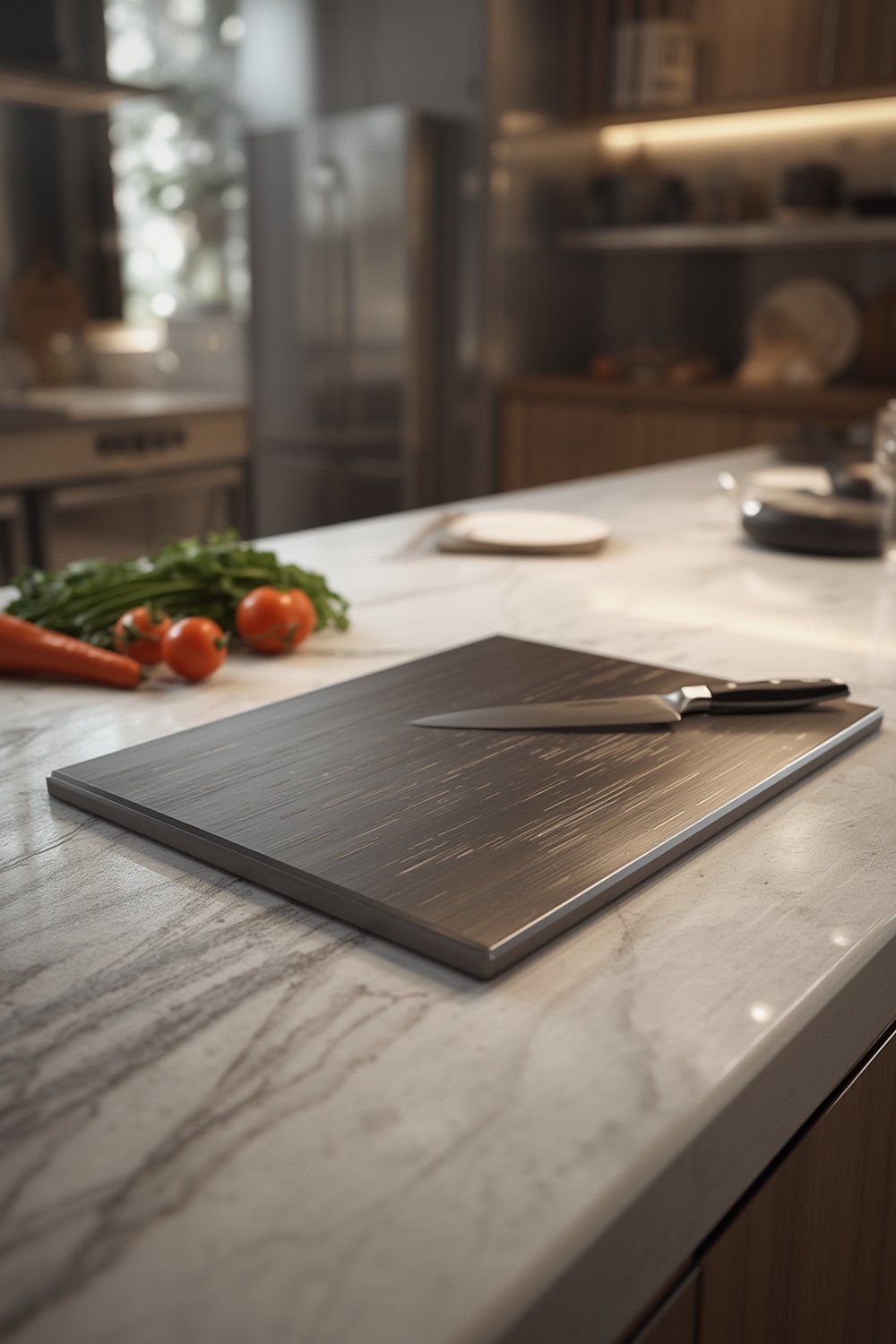
The interest is driven by several real and perceived advantages:
- Hygiene appeal: Non-porous titanium resists juice, odor, and bacteria absorption.
- Long-term durability: Real titanium is nearly unbreakable, dent-resistant, and warp-proof.
- Easy maintenance: Simple rinsing and wiping mean quick cleanup—often with just soapy water.
- Knife preservation: Marketing claims say titanium is softer than knife steel, so won’t dull edges as quickly.
If you’re considering an upgrade from traditional boards, pay close attention to the practical and scientific realities. For those interested in other high-performance kitchen tools, our Ultimate Guide to Mortar and Pestle Sets dives deeper into how material selection impacts real kitchen performance.
How to Choose and Use a Titanium Cutting Board: Actionable Guide
Ready to explore this new kitchen tech? Here’s a realistic, step-by-step guide to get the most from your titanium cutting board—before and after your purchase.
- Clarify your needs. Are you seeking a board for raw meat, vegetables, general prep, or as a premium kitchen display piece? Titanium excels where hygiene and durability are top priorities, but the cost is high.
- Check for true certification. Look for boards like Taima® that specify Grade 1 medical-grade titanium, third-party lab testing, and FDA compliance. See real certification claims here. If details are vague, look elsewhere.
- Inspect the feel and finish. Quality titanium boards often feature smooth, brushed, or nano-coated finishes. Some brands refer to this as “Tita-Nano™ surface technology.” Avoid any product with visible seams or inconsistent surface coloration—these may be mixed metal or lower grade.
- Rinse before first use. Although lab-sterile by design, always wash a new board with warm, soapy water before preparing food.
- Be aware of sensory differences. Expect a metallic “ring” or unusual sound under your knife—users report that this is normal and quickly becomes unnoticeable.
- Routine cleaning: Wipe with a non-abrasive cloth and mild detergent. Most stains, smells, and residues simply rinse away. Hot water is usually safe, but avoid aggressive steel wool or harsh bleach.
- Long-term maintenance: Unlike wood, there’s no oiling or seasonal dehydration to worry about. Regular dish soap or a light vinegar rinse restores shine and cleanliness.
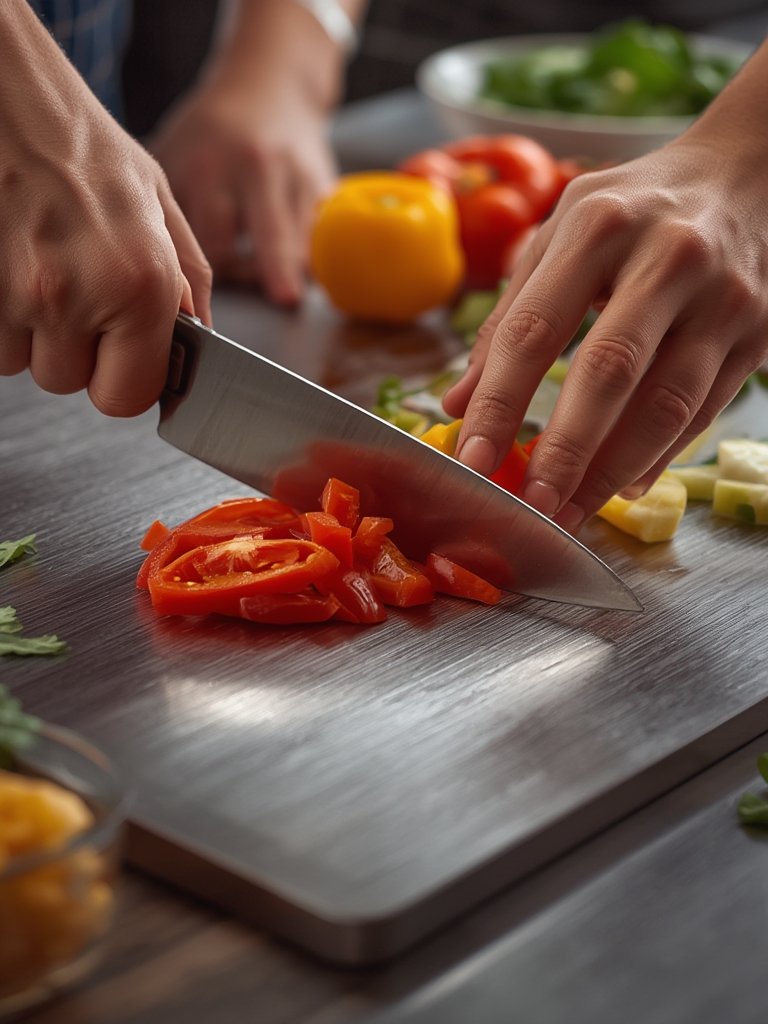
For those who value upgraded kitchen organization, pairing your board with a proper magnetic knife holder and a reliable stainless steel garlic press can round out a high-efficiency workspace.
Advanced Analysis & Common Pitfalls: Is Titanium Really Better?
The upgrade isn’t always perfect. Review these realistic limitations and challenges before committing to a titanium cutting board.
- Lack of independent scientific validation. Most “antibacterial” hype is based on manufacturer testing rather than university labs or peer-reviewed research. Relevant independent studies focus on wood vs. plastic, not titanium.
- Sound and sensory differences. Cutting on titanium produces a noticeable metallic ring—acceptable for some, annoying for others. Most users adapt quickly (source: Taima reviews), but it’s different than the muted feedback of wood or plastic.
- Knife edge retention claims are mostly theoretical. Marketing states that “steel is harder than titanium” so knives should stay sharp, but there’s no published data on how titanium boards affect blade angles or edge wear after extended use.
- Unknowns around surface wear and hygiene after years of slicing. There’s little data on how repeated knife scoring affects the supposed antibacterial action of titanium nano-coatings.
- High upfront cost with fragmented pricing transparency. Real market pricing is not widely published, which makes it hard to benchmark fair value or compare to high-end wood or composite boards.
- No standardized food safety certifications listed. Boards often reference “FDA-compliant” or “medical grade,” but specifics (ISO, NSF, UL) are usually unlisted.
- Potential for over-promising on hygiene. One YouTube reviewer questions whether bacteria on the surface of a non-porous board is really any less risky without careful cleaning—good practice is still essential.
| Feature | Titanium | Wood | Plastic |
|---|---|---|---|
| Antibacterial Claims | No peer-reviewed data Marketing-based |
Some peer-reviewed data | Tested in studies, not superior |
| Odor Resistance | High (non-porous, does not absorb) | Low (absorbs food odors) | Moderate |
| Knife Friendliness | Unproven, theoretically soft | Generally very good | Varies by material |
| Sound During Cutting | Metallic, ringing | Quiet, muted | Quiet |
| Maintenance | Easy, no oiling | Periodic oiling, drying care needed | Dishwasher safe (most) |
| Cost | High, unclear MSRP | Moderate-high | Low-moderate |
Want more insights on keeping your kitchen tools clean and efficient? See our Drying Mat Guide or learn about the practicalities of Sink Mats for Hygiene.

Conclusion
Titanium cutting boards offer unique strengths: exceptional durability, excellent odor resistance, and a sleek, easy-to-clean appeal. However, the lack of independent research and real-world, long-term data means you should set realistic expectations. If you crave a high-end look and feel, and want a board that avoids absorbing food juices or smells, titanium’s worth exploring. Just remember, even the best titanium cutting board can’t replace good cleaning habits or proven food safety techniques. If you’re ready to upgrade, review certifications and buy from a brand that stands by its claims—for serious cooks, it’s a bold statement piece. Curious about other tools and how to choose them? Dive into our Ultimate Cheese Grater Guide now.
Ready to upgrade your kitchen? Find a certified titanium board that fits your hygienic, modern style today.
FAQ
Are titanium cutting boards truly antibacterial?
There are no peer-reviewed laboratory studies as of 2024 confirming superior antibacterial performance over wood or plastic. Most antibacterial claims rely on manufacturer tests rather than independent research. Good cleaning habits are still necessary (source).
Will a titanium cutting board dull my kitchen knives?
Marketing claims suggest titanium is softer than knife-grade steel and should not dull blades quickly. However, there is no published, comparative data confirming reduced knife wear compared to wood or soft plastic. Users report no dramatic blade problems in regular household use.
How should I care for a titanium cutting board?
Simply wash with mild detergent and warm water, and air dry. Avoid harsh steel wool or abrasive cleaners. No oiling or special treatments are required, unlike wooden boards.
Do titanium cutting boards absorb odors?
No. Thanks to their non-porous structure, titanium cutting boards do not absorb or retain odors from garlic, onion, fish, or other foods (source).
Are they worth the high price?
Titanium cutting boards are a premium investment. You’ll pay more up front for durability, hygiene, and style. Since pricing data is limited, compare features and certifications closely to ensure value. If you rarely replace boards, titanium may pay off—otherwise, high-quality wood or plastic may be sufficient.