

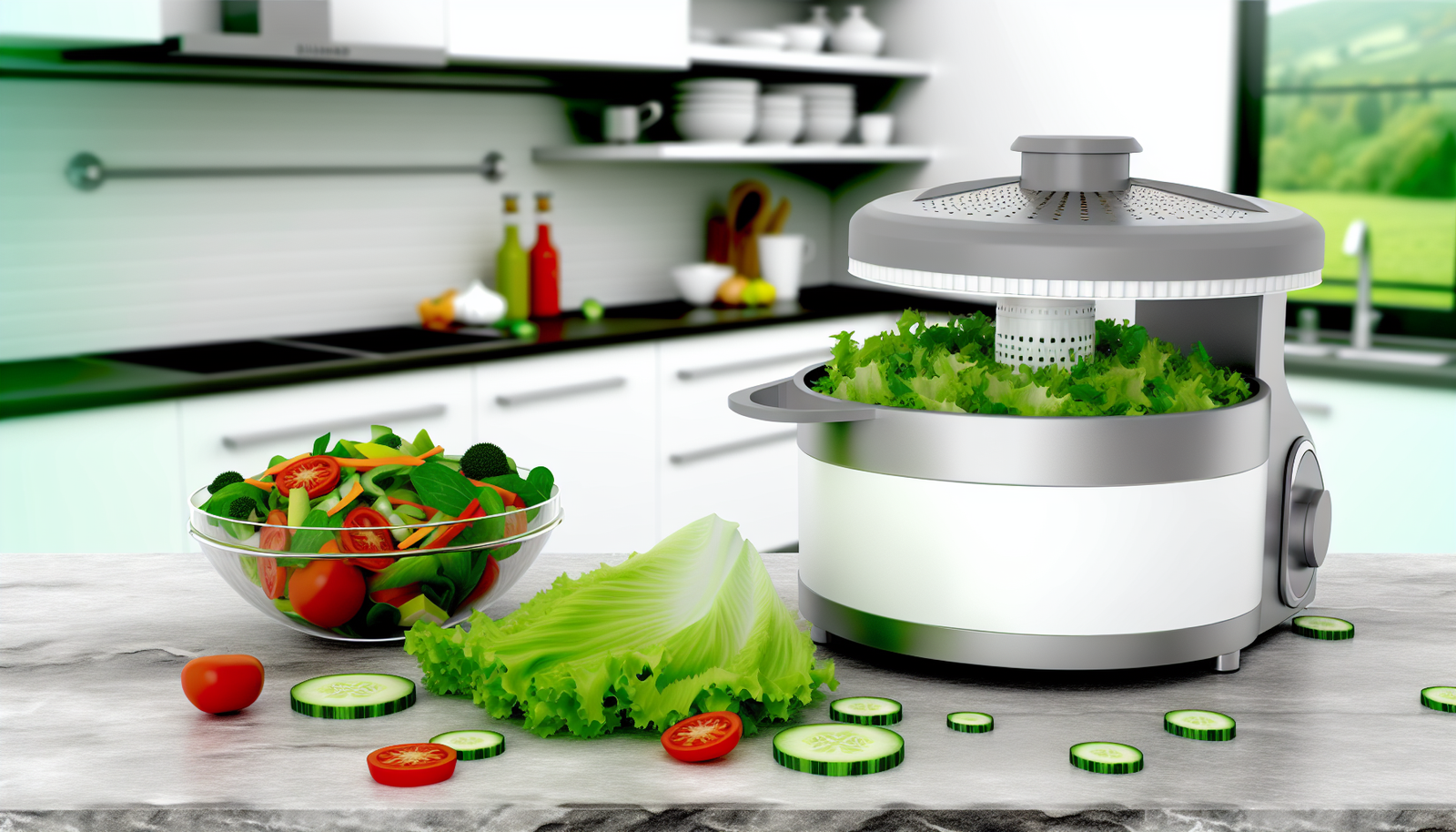
Salad spinners are essential kitchen tools designed to efficiently wash and dry salad greens using centrifugal force. By removing excess moisture, they help keep greens crisp and allow dressings to adhere better. This article explores the history, mechanisms, selection tips, benefits, and maintenance of salad spinners, providing everything you need to know for fresher, tastier salads at home.
Table of Contents
The Evolution and Purpose of the Salad Spinner
The salad spinner, now a familiar sight in many kitchens, has a surprisingly modern history that traces its roots to a desire for greater efficiency in food preparation and a heightened focus on freshness. In the mid-20th century, as culinary culture began to value crisp, visually appealing salads, earlier methods for drying lettuce—such as patting leaves dry with towels or tossing them in wire mesh baskets—were found lacking. These techniques often left greens limp, soggy, or bruised, subtly diminishing flavors and the sensory pleasure of a fresh salad.
The breakthrough came with the application of centrifugal force—a physics principle long used in industrial and scientific contexts—to kitchen gadgetry. The earliest known patents for devices similar to the modern salad spinner emerged in Europe in the 1970s, most notably credited to French and Swiss inventors who sought a more effective method for drying leafy vegetables. Their designs—they featured an inner perforated basket that spins inside a fixed bowl—were swiftly refined and embraced by manufacturers, who recognized the growing interest in home cooking and healthy eating.
The appeal of the salad spinner was immediate: by rapidly spinning fresh greens, water droplets are efficiently flung away from the leaves’ delicate surfaces without causing damage. This process leaves salad components notably drier and more vibrant compared to the results of manual drying. Moreover, the tool’s design aligns with a broader shift in kitchenware toward convenience and multi-functionality in the late 20th century. Home cooks discovered that spinning not only saved time, but also extended the shelf life of greens by reducing residual moisture, which can accelerate spoilage.
What truly set the salad spinner apart—and propelled it into worldwide popularity—was how it elevated the everyday preparation of salads, transforming what was once a laborious, messy step into a quick, satisfying action. This revolutionized the salad experience in kitchens, paving the way for further design advancements and more efficient mechanisms, which are explored in the next section.
How Salad Spinners Work
Modern salad spinners are ingeniously simple devices, yet their effectiveness lies in the harmonious design of their three key components: the outer bowl, the colander basket, and the spinning lid. The outer bowl serves as a sturdy container that both collects expelled water and provides a barrier that keeps any errant spray from reaching your countertops. Nestled within, the colander basket is perforated to allow water to escape freely while securely holding the greens in place during the spinning action. This basket is shaped to maximize flow and circulation, ensuring every leaf has room to tumble and shed moisture evenly.
The spinning lid is the engine of the device, housing the mechanism that imparts rapid rotation to the colander. There are several approaches to activating this movement. Crank handles require users to manually turn a side or top-mounted handle, giving a sense of control over the pace. Pull cords use a retractable string much like a lawnmower starter—quick, forceful pulls send the basket spinning at high speeds with minimal effort. Push buttons or pumps offer a single-handed solution; a simple series of presses powers the spinning action through internal gears or springs, allowing users to keep a free hand for stabilizing the bowl.
Regardless of mechanism, the physics remains the same: when spun, the leafy greens inside experience centrifugal force, a phenomenon where objects move outward from the center of rotation. The water, being denser than the leaves, is flung through the colander’s holes to gather at the outer bowl’s walls. This process quickly and thoroughly removes moisture, crucial for achieving drier, crisper greens that cling to dressings and maintain their texture. Differences in design—such as the number and size of perforations, lid ergonomics, and bowl stability—can affect efficiency, making the choice of spinner just as important as its operation.
Key Factors to Consider When Choosing a Salad Spinner
Choosing the right salad spinner for your kitchen requires thoughtful consideration to suit your cooking habits, family size, and available space. One of the main factors is size—large salad spinners can process bigger batches of greens, which is ideal for families or if you often entertain guests. However, they require more storage space, so if your kitchen is compact or you primarily prepare single servings, a smaller model is often much more practical. Some designs nestle together or have collapsible features to minimize their footprint when not in use.
Material is another important aspect. Plastic is lightweight and usually less expensive, making it a popular option for everyday use. For those who prioritize longevity and style, stainless steel models provide enhanced durability and can double as attractive serving bowls. Regardless of choice, look for BPA-free plastics or food-safe metals to ensure health and safety.
The spinning mechanism also affects convenience and results. Crank handles, pull cords, and push buttons each offer different ergonomics—test a few in-store or check reviews online for ease of operation and control over speed. A sturdy, slip-resistant base helps keep the spinner in place, especially when spinning at higher speeds.
Consider durability by checking the quality of the lid, gears, and overall construction. Salad spinners with replaceable parts and robust locking systems tend to last longer and withstand frequent use. If storage space is a concern, look for features like detachable parts or models designed to fit inside one another, and consider vertical storage on pantry shelves.
Finally, assess your kitchen’s workflow and how a salad spinner will fit. Choose a model that aligns with your meal prepping style and complements your kitchen’s size, ensuring greater freshness and ease for everyday cooking.
Benefits of Using a Salad Spinner in Everyday Cooking
Owning a salad spinner transforms the way you approach fresh foods in your kitchen. One of the most notable advantages is the remarkable speed with which you can wash and dry salad greens. With just a few spins, leaves emerge crisp and nearly moisture-free, ready to absorb dressings without becoming limp or soggy. This efficient drying process not only saves time but also elevates the overall texture and flavor of your salads—excess water is spun away, preventing diluted tastes and watery salads.
A salad spinner isn’t limited to just lettuce or mixed greens. Its versatility extends to a wide range of fresh produce and herbs. You can quickly rinse and dry spinach, kale, arugula, and even tender herbs like parsley and cilantro, maintaining their delicate structure. In addition, a spinner can be used to gently dry berries after washing, ensuring they don’t become crushed or mushy from hand drying. Draining canned beans or rinsed grains also becomes easier with a spinner basket, reducing the need for multiple colanders and towels.
Regularly using a salad spinner promotes healthier eating habits by making the task of preparing nutritious salads and fresh garnishes more convenient. When washing and drying greens becomes quick and nearly effortless, it’s easier to incorporate them into daily meals. For families, this simple device often encourages everyone—kids included—to build bigger, greener salads and explore a greater range of vegetables and herbs, minimizing prep-time excuses.
Beyond the obvious benefits, a salad spinner helps extend the shelf life of washed produce. Drier leaves are less susceptible to spoilage, helping to reduce food waste. With these practical advantages, the salad spinner becomes a staple that supports a healthy, fresh-eating routine, ready for whatever your next meal inspires.
Maintenance and Best Practices for Longevity
Proper care and maintenance are central to extending the life of your salad spinner and ensuring peak performance in your kitchen. Begin by thoroughly cleaning your salad spinner after each use. Most models can be disassembled into the bowl, colander, and lid—wash the bowl and colander with mild dish soap and warm water, or place them on the top rack of your dishwasher if the manufacturer permits. The lid mechanism can sometimes harbor trapped water or bits of greens; check for a removable lid insert or opening for easy cleaning. After washing, allow all parts to air dry completely before reassembling to prevent mold and mildew.
To minimize wear and tear, avoid forceful operation; it’s best to spin greens in gentle, even bursts rather than aggressive pulls that can strain gears and cords. Never overload the basket, as this places excess pressure on moving parts. Handle locking mechanisms, buttons, and pull cords with care—these are often the first points of failure if misused.
For efficient storage, consider keeping your spinner assembled and storing dry greens inside in your refrigerator, but only if your spinner is designed for cool storage. Alternatively, nested storage keeps lids and baskets together, saving space and reducing the chance of lost pieces.
If the spinner becomes difficult to operate, examine the gears for debris or misalignment. A small brush can dislodge stuck particles, and a drop of food-safe lubricant can help restore smooth motion. For broken parts, contact the manufacturer for potential replacement components before discarding the entire unit. Should your salad spinner reach the end of its lifespan, separate its parts—plastic bowls and baskets may be recyclable if labeled properly, while lids with mixed materials might need special handling. Before disposal, check for local recycling programs that accept kitchen tools to minimize environmental impact.
Conclusions
Salad spinners have transformed salad preparation, making fresh, crisp greens readily accessible for any meal. By understanding the tool’s history, function, and proper care, you can select the ideal model for your kitchen and maximize both convenience and culinary quality. Investing in a quality salad spinner ensures healthier meals and simplifies daily cooking routines.
For more useful kitchen equipment , explore our full collection in the Other Tools category.
[…] increasingly common but not standard. Explore them in related organization resources such as our salad spinner guide for preserving […]
[…] to last longer? Use a dedicated humidity drawer, and if you’re a salad lover, check out our salad spinner guide for workhorse kitchen […]