

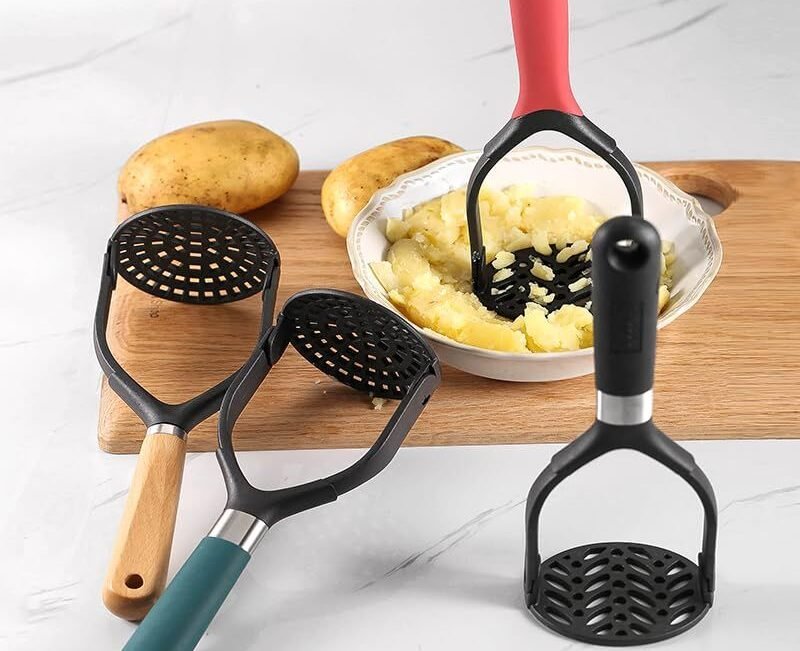
Heavy duty potato mashers are essential tools for both home chefs and professionals aiming for fluffy, perfectly textured mashed potatoes and other comfort foods. In this article, we explore what makes a potato masher ‘heavy duty,’ examining their construction, benefits, and how the right choice can completely transform your food preparation experience.
Table of Contents
Understanding Potato Mashers and Their Versatility
The heavy duty potato masher has a long history, evolving from simple wooden tools used centuries ago into the durable kitchen essentials found in modern homes today. Its core purpose—turning cooked potatoes into fluffy, lump-free mash—remains central to many culinary traditions around the world.
Beyond classic mashed potatoes, a heavy duty potato masher proves useful in a wide range of recipes. It easily crushes cooked beans for refried dishes, mashes pumpkin or squash for soups and pies, and breaks down ripe avocados for smooth guacamole.
Many bakers also rely on a heavy duty potato masher to soften butter, blend cream cheese, or crumble mixtures evenly. This versatility makes it an essential kitchen tool, valued for both strength and control across sweet and savory preparations.
The effectiveness of a heavy duty potato masher lies in its ability to apply even pressure and controlled shearing force. This balanced action creates a texture that neither a fork nor an electric mixer can truly replicate.
When potatoes or other ingredients are pressed through the wide, sturdy head of a heavy duty potato masher, they are gently compressed and broken apart. This process preserves lightness and airiness, rather than turning the mixture into a dense or gluey paste.
This quality is essential for achieving restaurant-style mashed potatoes or rustic bean dips with the ideal mouthfeel. While tools such as ricers or immersion blenders can produce smoother results, they often remove the desirable texture that a heavy duty potato masher maintains.
For cooks who value control, consistency, and texture, a heavy duty potato masher remains an irreplaceable kitchen tool—offering precision that automated or overly fine tools simply cannot match.
Defining Heavy Duty Design in Potato Mashers
A heavy duty potato masher earns its name through a combination of strong materials, reinforced construction, and ergonomic design. Unlike standard models, it is built to handle dense foods and repeated use without bending or weakening.
Most heavy duty potato mashers feature thick, high-grade stainless steel heads that resist corrosion, warping, and pressure. This durability is essential when mashing large batches of potatoes or working with fibrous vegetables such as turnips or sweet potatoes.
Some heavy duty designs also incorporate reinforced food-grade plastic for lighter handling, but these models are engineered with added structural support. In every case, a true heavy duty potato masher is designed to deliver strength, reliability, and consistent results where standard mashers often fall short.
Equally critical is the design of the masher head. Two dominant styles prevail: zig-zag wires and perforated plates. Zig-zag wire mashers, forged from solid, welded stainless steel, provide excellent penetration and leverage for coarsely breaking down dense root vegetables. Perforated plate mashers feature thick disks peppered with strategically placed holes, balancing force with uniform mashing, and are especially prized for yielding smooth, lump-free results. Both designs, when intended for heavy duty use, boast reinforced joints and seamless construction to prevent warping and food debris buildup.
Handle ergonomics cannot be overstated in heavy duty tools. Handles are typically enveloped in non-slip silicone or thick rubber, contoured to support a firm grip and reduce fatigue during high-volume use. Often, these handles are proportionally longer and sturdier, providing the leverage needed to apply significant pressure without discomfort. Collectively, these attributes allow heavy duty potato mashers to deliver consistent, high-quality results, and withstand the demands of both rigorous home cooks and professional culinary environments, setting them apart in performance and longevity.
Comparing Heavy Duty Mashers to Standard Models :
When comparing heavy duty potato mashers to standard or budget-friendly alternatives, significant differences emerge in terms of performance, weight, and durability. Heavy duty mashers are noticeably heftier, providing a sturdier feel during use; this added weight is not merely for show—it helps the user break down denser foods, such as starchy potatoes or root vegetables, with less exertion. In contrast, lighter, standard models often lack the force required for smooth, lump-free mashing, particularly in large quantities.
This disparity is most apparent when preparing sizable batches. Budget-friendly mashers tend to feature thinner wires or weaker, plastic components. Under stress, these parts are prone to bending, warping, or even snapping. Such failures compromise the mashing process, leading to inconsistent textures and, sometimes, bits of broken plastic or bent metal mixed with the food. Heavy duty models, by comparison, remain rigid and maintain their structure batch after batch, thanks to reinforced materials and more substantial construction.
The comfort factor cannot be overstated. Intensive mashing with inadequately built tools quickly becomes fatiguing, especially if the handle absorbs pressure poorly or flexes in the hand. Heavy duty mashers typically feature ergonomic, non-slip grips that distribute pressure evenly and reduce strain during repetitive motions. For commercial kitchens or during holiday feasts, this can spell the difference between swift, effortless mashing and a frustrating, time-consuming ordeal.
In terms of food quality, heavy duty mashers produce a smoother, more uniform mash, as their robust design allows for consistent compression of ingredients. Users also notice a marked increase in speed and efficiency. This translates to better results not just for potatoes, but for mashing carrots, turnips, or other dense foods—tasks that commonly defeat flimsier tools.
Selecting the Right Heavy Duty Potato Masher for Your Needs :
When choosing a heavy duty potato masher to upgrade your kitchen arsenal, attention to detail can make all the difference. Begin with the handle—comfort and grip are crucial, especially for extended mashing sessions or when tackling denser foods like sweet potatoes or turnips. Opt for a non-slip ergonomic handle made of stainless steel, silicone, or reinforced plastic. These materials not only improve comfort but also provide stability when applying pressure, reducing strain for home cooks and professional chefs alike.
Next, scrutinize the head design. Traditional wire heads, though classic, don’t always fare well with heavy duty needs. Consider mashers with a perforated plate or grid-style head, typically made of robust, rust-resistant stainless steel. A wide mashing surface covers more potatoes in fewer passes, and evenly distributed holes or slots prevent clogs while ensuring a uniform mash. The edge of the mashing plate should be smooth to avoid damaging cookware, yet substantial enough to handle dense root vegetables and other ingredients like avocados or beans.
Ease of cleaning is another significant factor. Look for mashers that are dishwasher safe with minimal crevices where potato residue can linger. Fully welded designs minimize bacteria traps and simplify rinsing, making them ideal for high-volume or commercial kitchens.
Compatibility with various pots matters, too. A slightly angled or offset head lets you reach corners and mash effectively in both shallow pans and deep stockpots. For commercial kitchens, verify that the masher meets NSF standards for food safety and can withstand high-frequency use.
Leading brands such as OXO, KitchenAid, and Winco offer models acclaimed for durability and reliability. High-performing commercial favorites like the RSVP International Endurance or Zyliss Premium ensure consistent results even under heavy workloads. Carefully assessing these features ensures you choose a masher suited to your specific mashing tasks, minimizing fatigue and maximizing food quality.
Maintenance Tips and Best Practices :
Proper maintenance is essential to get the most out of your heavy duty potato masher and to preserve its high performance in your kitchen over time. Whether your masher is constructed from stainless steel, nylon, or a combination of materials, routine care will help prevent wear, rust, or food contamination. Start by cleaning the masher promptly after each use. For metal mashers, especially those made from high-grade stainless steel, hand washing with warm soapy water and a non-abrasive sponge is recommended. Avoid harsh scouring pads, as they can scratch surfaces and encourage rust. If your masher is dishwasher safe, placing it on the top rack will minimize exposure to higher heat and aggressive detergents, prolonging its lifespan.
Plastic or nylon parts require similar attention: wash them gently, taking care not to bend or warp any flexible sections. Be sure to dry all parts thoroughly, as lingering moisture is a primary cause of rust or degradation, even in “rust-resistant” metals. For mashers with multiple materials, inspect the joints where metal meets plastic—trapped residue can not only affect hygiene but also weaken structural integrity.
Store your masher in a dry area, ideally hanging or resting in a utensil tray where it won’t be squashed. Avoid tossing it with sharp objects or heavy cookware, as this can cause unwanted dents or damage the mashing plate.
When mashing, use deliberate downward pressure while rocking gently back and forth; this distributes force, preventing bending and maintaining the masher’s shape. On non-stick cookware, ensure your masher’s head is compatible to avoid scratching surfaces. Practicing these habits not only keeps your potato masher in optimal condition but also safeguards the quality and consistency of your culinary results, ensuring smooth, lump-free mashed potatoes and robust kitchen performance for years to come.
Conclusions :
Heavy duty potato mashers stand out for their robust build and versatile performance, elevating your kitchen capabilities. By understanding their benefits and how to select, use, and care for them, you can achieve consistently excellent results with mashed potatoes and beyond. Investing in quality ensures durability and superior food texture for years of culinary enjoyment.
For more useful kitchen equipment , explore our full collection in the Other Tools category .
[…] and to maximize every inch, don’t overlook complementary tools like a magnetic knife holder or a heavy-duty potato masher. Collaborating accessories can streamline cooking while a sink cover frees valuable prep […]
[…] deeper kitchen tool optimization, our potato masher guide breaks down the simple tricks for ingredient prep that pairs perfectly with efficient […]
[…] other actionable, kitchen-oriented guides, check out how to select kitchen tools or our overview of egg […]
[…] simple kitchen tech you can use every day? You might also like our actionable guides to choosing a heavy duty potato masher, measuring cups and spoons, and stainless steel garlic press […]
[…] kitchen skills make a huge difference—even with tools as simple as measuring spoons or a potato masher, inaccuracy can ruin results. The same goes for espresso grinders: consistent technique and mindful […]
[…] you want to upgrade the rest of your kitchen as well, explore innovative options like a heavy duty potato masher or a stainless steel garlic press for your prep […]
[…] interested in optimizing all aspects of your kitchen gear, don’t miss our detailed guides on choosing a heavy-duty potato masher or how a stainless steel garlic press streamlines meal […]