

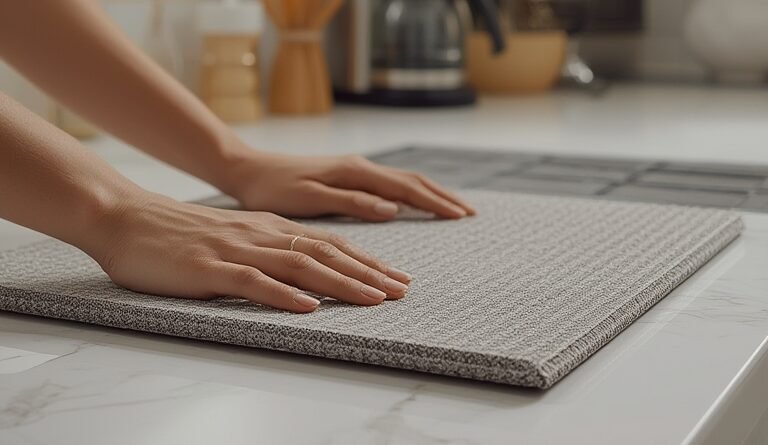
Countertop mat solutions are an essential upgrade for any kitchen, delivering affordable protection, added safety, and style for your countertops—yet most people overlook how much damage their surfaces suffer from daily use.
Key Takeaways :
- Countertop mats extend the life of kitchen surfaces by guarding them against heat, stains, and spills.
- Material choice directly impacts effectiveness—always check for genuine heat and water resistance before buying.
- Most common countertop types benefit from mats, but material fit is critical for long-term success.
- What Is a Countertop Mat and Why Use One?
- Step by Step: How to Use and Choose a Countertop Mat
- Advanced Analysis and Common Pitfalls
- Conclusion
- Frequently Asked Questions
What Is a Countertop Mat and Why Use One ?
A countertop mat is a removable, protective barrier placed on your kitchen surfaces to prevent damage from hot pans, spills, knife nicks, stains, and daily wear. With kitchen countertops accounting for up to 70% of application volume in residential spaces, maintaining their finish and value is more important than ever.
Unlike installing new granite, quartz, or laminate—which is costly and permanent—countertop mats are low-cost, flexible solutions. They let you create food prep, dish drying, and appliance zones without leaving marks or risking expensive repairs.
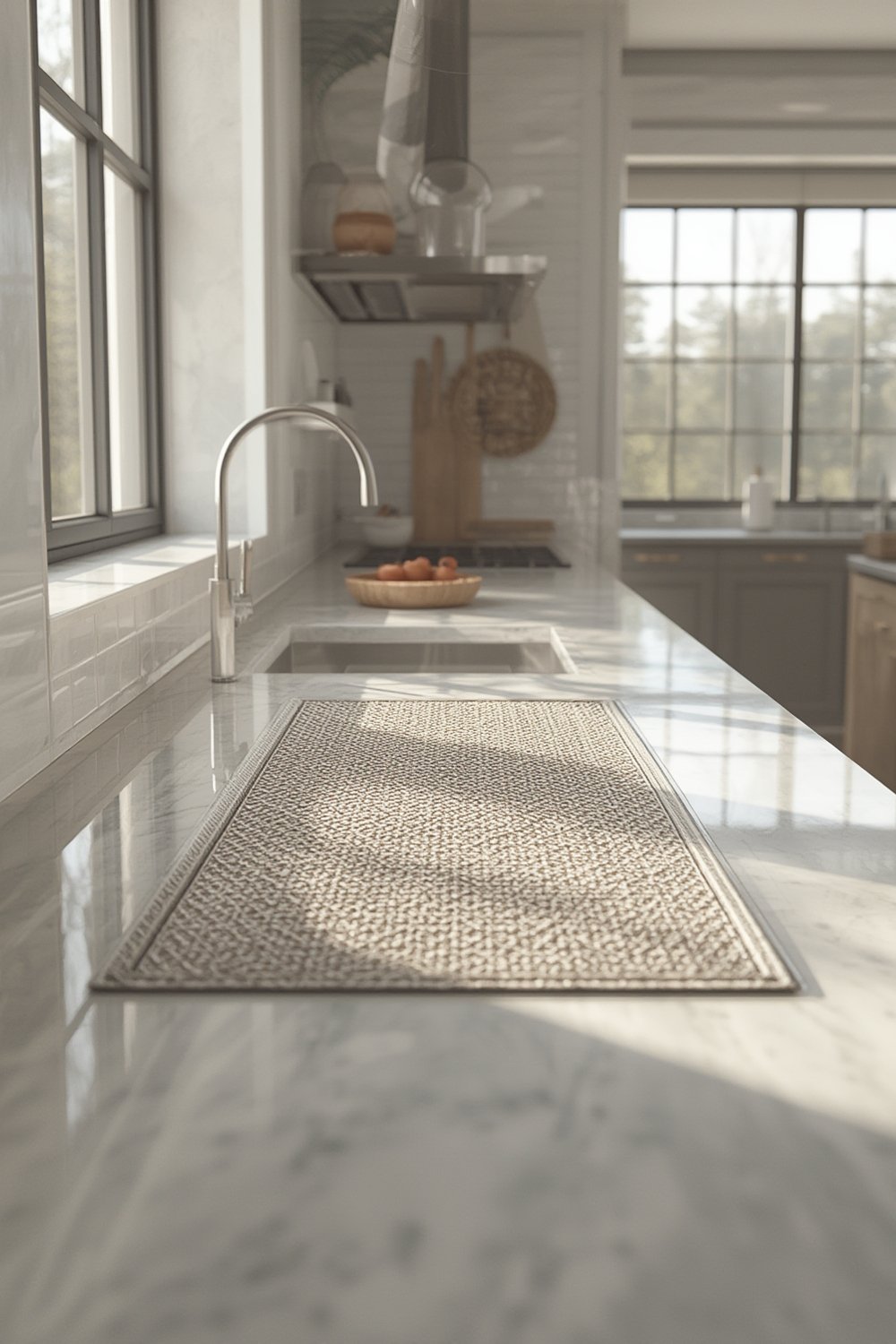
Whether you’re protecting a new solid surface or extending the life of existing countertops, using a mat gives you real peace of mind. Plus, it helps you to keep up with the latest look or theme with minimal investment, which is a major bonus as kitchen trends change fast—as market research confirms.
Well-chosen mats can be heat resistant, waterproof, and easy to clean—add-ons that every home cook, baker, or busy family can appreciate. If you’re a fan of practical kitchen accessories (like mortar and pestle sets or cheese graters), countertop mats belong at the top of your list.
Step by Step : How to Use and Choose a Countertop Mat
Protecting your counters is straightforward, but picking the right mat and using it effectively involves several smart steps:
- Measure your space. Before shopping, grab a tape measure and write down the width and depth of the areas you want to cover—especially near the sink, stove, or food prep zones. If you use a manual food chopper or avocado slicer, consider those “messy” hot spots.
- Pick a material fit for your needs. Silicone and rubber mats are top picks for heat and water resistance, while microfiber works best for quick dish drying. Avoid thin plastic mats—they slide and can warp under hot pots.
- Check for specific features. Look for non-slip backing, easy-clean surfaces, ridged or grooved designs for draining, and safe temperature ratings (at least 400°F for true heat protection). Premium mats also have rolled edges or reinforced stitching for durability.
- Trial placement/multiple uses. Test placements before you commit—some mats can double as trivets, dish drying pads, or even pastry boards. If needed, trim the mat to custom-fit corners or island areas.
- Clean and maintain routinely. Most mats are dishwasher or machine washable. Clean frequently to avoid stains or bacteria buildup, especially in humid or high-traffic kitchens.
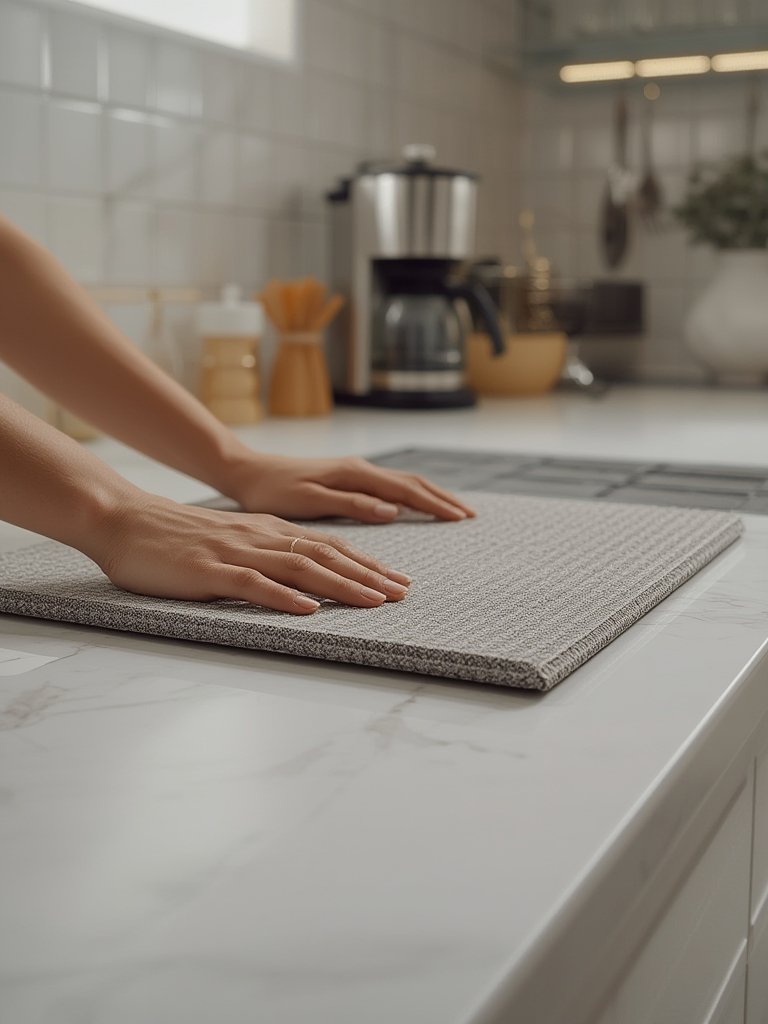
For best results, assign dedicated mats to specific tasks (one for hot pans, one for dish drying). This reduces cross-contamination and extends the lifespan of each mat. If you’re setting up a new kitchen organization system, consider placing them near high-use tools—like your favorite kitchen organization helper.
Don’t be afraid to upgrade mats annually or when discoloration, warping, or odors appear. Like other kitchen essentials (think rolling pins), the best mats are those you use often and replace when performance fades, ensuring optimal protection for your surfaces.
Advanced Analysis and Common Pitfalls
Based on recent market analysis from Fortune Business Insights and SNS Insider, countertop demand is surging—yet most research focuses on permanent installations, not the removable accessories people use daily. As such, there are some real pitfalls and issues to be aware of when relying on countertop mats:
| Common Problem | How It Happens | How to Prevent |
|---|---|---|
| Moisture Trapping | Water left under a mat, especially on wood or laminate, can cause swelling or mildew. | Always dry mats and wipe the counter beneath them regularly. |
| Heat Transfer Failure | Low-grade or thin mats may not block full heat from pots, risking surface burns. | Check the mat’s heat rating; don’t place extremely hot items on cheap/unrated mats. |
| Sliding/Safety Issues | Mats without sufficient grip can slip, causing accidents with dishes or knives. | Choose mats with strong, non-slip backings and test them before regular use. |
| Discoloration and Odor | Mats used for food prep may absorb colors or smells over time. | Clean after every use, and replace mats at the first sign of persistent stains or odors. |
| Poor Fit/Function | A mat too small, too large, or the wrong shape can leave exposed surfaces or not drain well. | Carefully measure your space and buy appropriately sized mats—or trim to fit as needed. |
Furthermore, countertop mats are not a one-size-fits-all solution. For example, granite and engineered quartz—currently the most popular materials per Mordor Intelligence—are less likely to stain but can chip if heavy items are dropped directly onto them. Laminate is budget-friendly but easily scorched or bubbled by hot pans, making mats especially vital for this segment.
Mats also won’t stop long-term surface dulling or deep-set chemical stains, so don’t use them as your only defense against harsh chemicals or heavy kitchen traffic. Instead, pair mats with good cleaning practices and surface-specific care routines. See advanced prep suggestions in guides like Essential Pastry Baking Tools for material-friendly workflow tips.
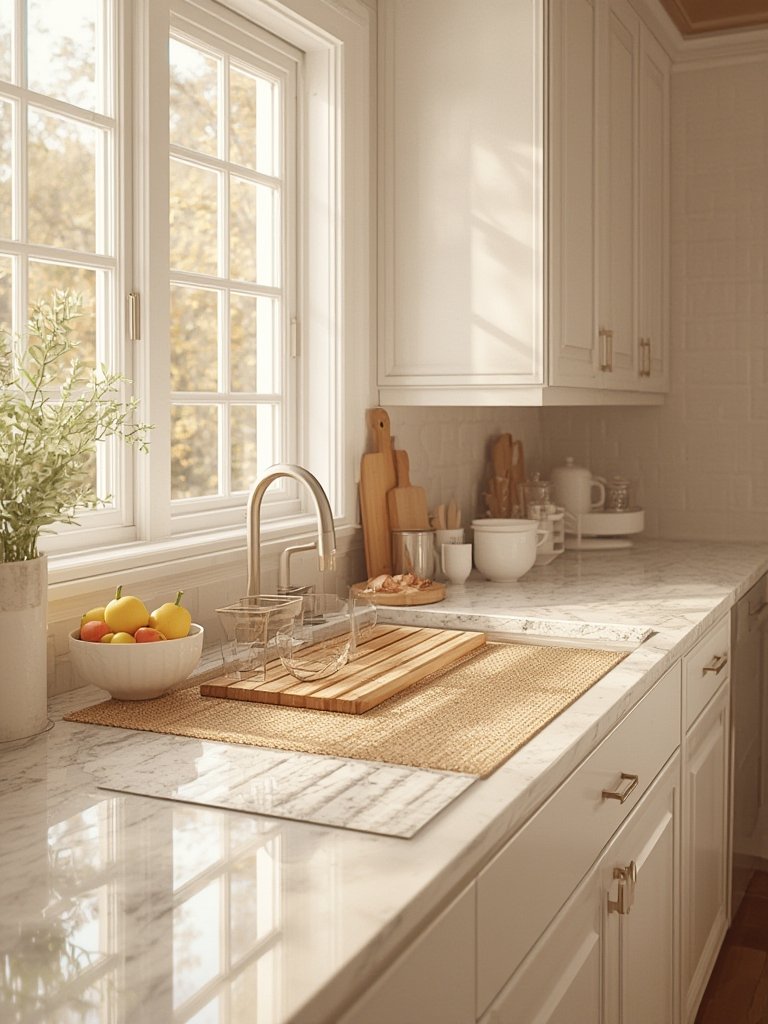
If your expectations are realistic—knowing mats offer strong but not absolute protection—you’ll get the most value from this kitchen upgrade, saving money and frustration down the line.
Conclusion :
Countertop mats are the easiest way to defend your work surfaces against everyday kitchen hazards. They offer flexible coverage, easy clean-up, and can help offset the risks tied to changing kitchen trends and heavy use. Whether you have granite, quartz, or laminate, the right countertop mat extends life and adds peace of mind—just be sure to choose carefully, maintain regularly, and replace as needed.
Ready to upgrade your kitchen protection? Review your countertop hotspots and invest in a quality mat today—your future self (and your counters) will thank you.
Frequently Asked Questions :
Are all countertop mats heat-resistant?
No, only some mats are truly heat-resistant. Always check the temperature rating before using them for hot pots or pans. Silicone mats typically offer the best resistance, while microfiber and thin plastics may melt or discolor.
Will a countertop mat protect against water and spills?
Yes, most mats are designed to be waterproof and catch spills—but moisture can still catch underneath. Wipe both the mat and the countertop beneath it regularly to prevent issues like stains or mold.
How often should I clean my countertop mat?
Ideally after every use, especially if you handle raw food or liquids. Most mats are dishwasher-safe, but check the label. Frequent washing also prevents odor and bacteria buildup.
Can I use a single mat for multiple purposes?
You can, but it’s not ideal for sanitation. Assign a dedicated mat for hot pans and a separate one for things like dish drying or bakery tasks. This helps avoid cross-contamination.
Do countertop mats work on all counter surfaces?
Yes, but some surfaces benefit more than others. Mats are essential for laminate and wood, while quartz and granite still benefit but may tolerate occasional heat or spills better. Still, mats reduce the risk of chips, stains, and daily micro-abrasion on any surface.
[…] protection, double up your setup: place a quick-dry dish mat underneath your drain mat or use a countertop mat in high-use zones for broader splash […]
[…] 7: Store Safely – Let your unit cool completely before packing in an RV or cabinet. Use a countertop mat for extra heat protection if your kitchen surface is […]