

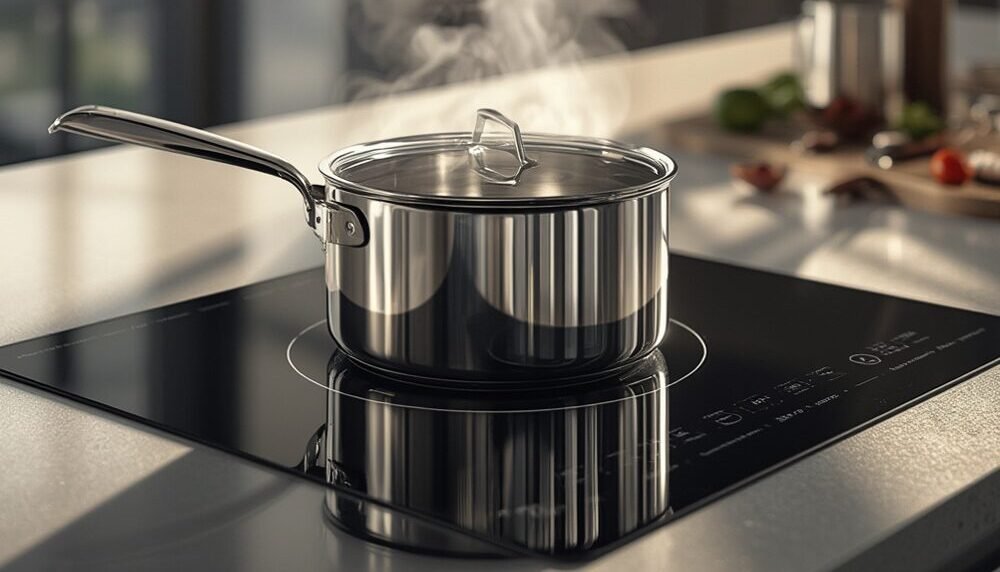
Induction pot technology is rapidly making its way into modern kitchens for good reasons—faster cooking, energy savings, and precise temperature control. If you’re considering induction cookware or just want to maximize your setup, understanding what sets induction pots apart will help you make smarter choices for everyday cooking.
Key Takeaways :
- The global induction cookware market is growing fast, led by Asia, Europe, and the US, and induction pots are seeing a 7.3% annual growth in 2024.
- Induction pots need a magnetic base, quality materials, and the right shape to perform well on induction cooktops.
- Induction pots offer energy efficiency and safety, but buyers should watch for product limitations and possible compatibility issues.
- Understanding Induction Pots: What Makes Them Different?
- Choosing & Using Induction Pots: A Step-by-Step Guide
- Pitfalls & Advanced Analysis for Buying Induction Pots
- Conclusion
- FAQ
Understanding Induction Pots : What Makes Them Different ?
Induction pots are specifically designed for use on induction cooktops, which use magnetic fields to heat the pot directly instead of relying on an open flame or direct electrical heating. This direct heating method makes induction cooking much faster and more energy-efficient compared to gas or electric stoves. The pot itself must have a base made of ferromagnetic material—such as stainless steel with a magnetic core or cast iron—so it heats up properly. If the pot’s base is not magnetic, it won’t work on an induction surface.
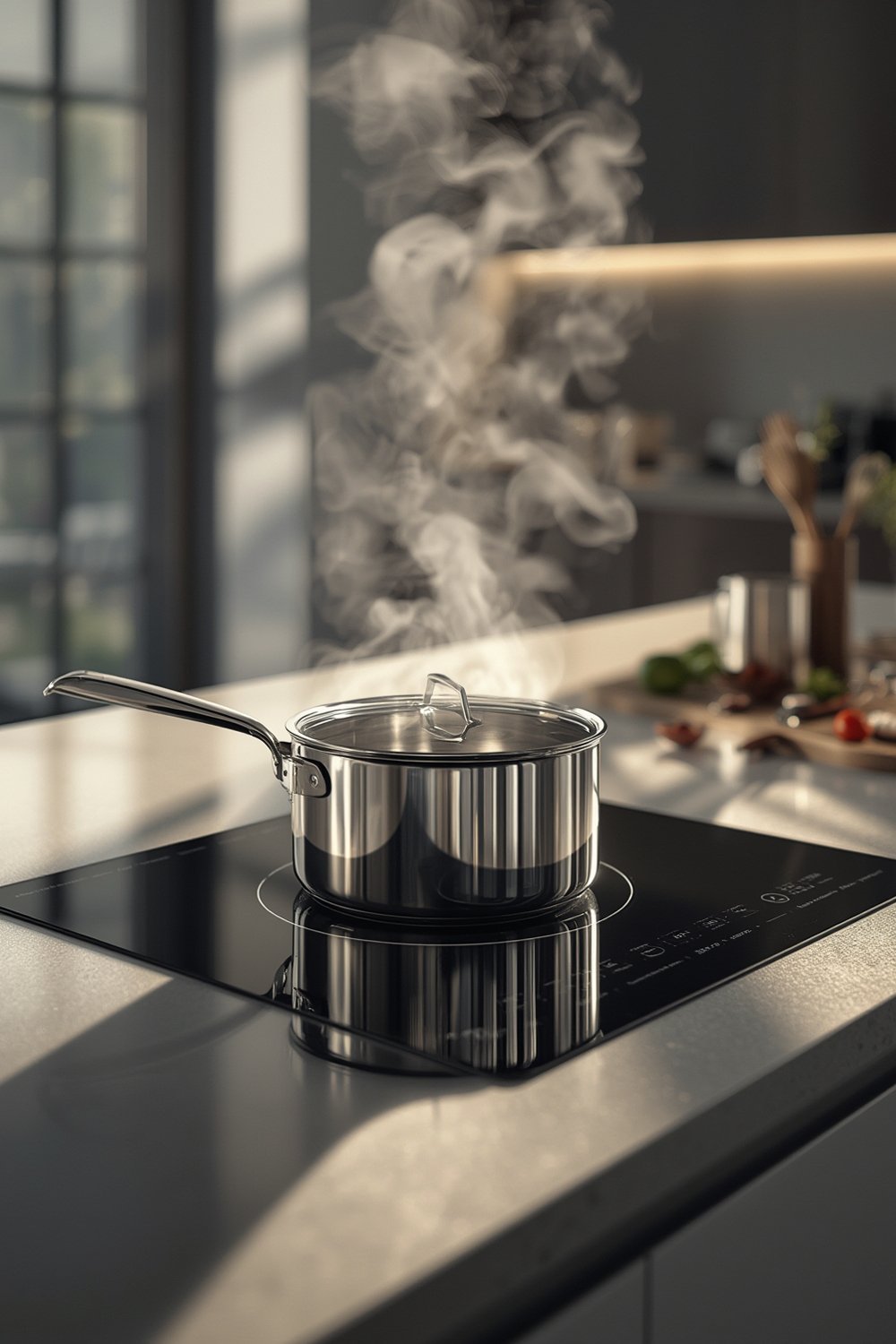
In 2024, the global induction cookware market is worth over USD 2.6 billion and continues to grow quickly in Asia-Pacific, Europe, and North America. The popularity surge is driven by urbanization, energy regulations, and the demand for time-saving, safe, and precise home cooking solutions (source).
Unlike traditional cookware, induction pots need careful construction: a perfectly flat, thick base for even heating, no warping under high heat, and no aluminum or copper unless it is bonded with a magnetic layer underneath. Well-designed induction pots allow you to switch between cooking methods while achieving consistent results, especially valuable for busy home cooks.
If you’re also interested in unique kitchen essentials, check out our guide on mortar and pestle history and uses to see how traditional tools complement modern cookware.
Choosing & Using Induction Pots : A Step-by-Step Guide .
Getting the best performance out of your induction pot requires knowing which features to look for, how to test for induction compatibility, and how to care for your cookware. Follow these steps:
Step 1 : Check the Material .
Always pick pots made from magnetic stainless steel or cast iron. Aluminum or copper pots generally won’t work without a bonded base. Reputable induction pots often list “induction compatible” or have the coil symbol underneath.
Step 2 : Test Flatness & Weight .
Flat-bottomed pots transfer heat best. Hold the pot up to the light to check that the base isn’t warped, which is critical for even induction heating. Heavier pots with a multi-layer base distribute heat more evenly, helping avoid hotspots and food sticking.
Step 3 : Confirm Base Thickness .
Look for a thick, layered bottom—usually at least 4mm—for better heat retention and minimal warping. Thin-bottomed pans may overheat, warp, or cook unevenly on high-powered induction burners.
Step 4 : Check Size Compatibility .
Match the pot size to your induction burner for best results. Using a pot that is much smaller than the cooking zone can cause the burner not to activate or lead to poor heat distribution.
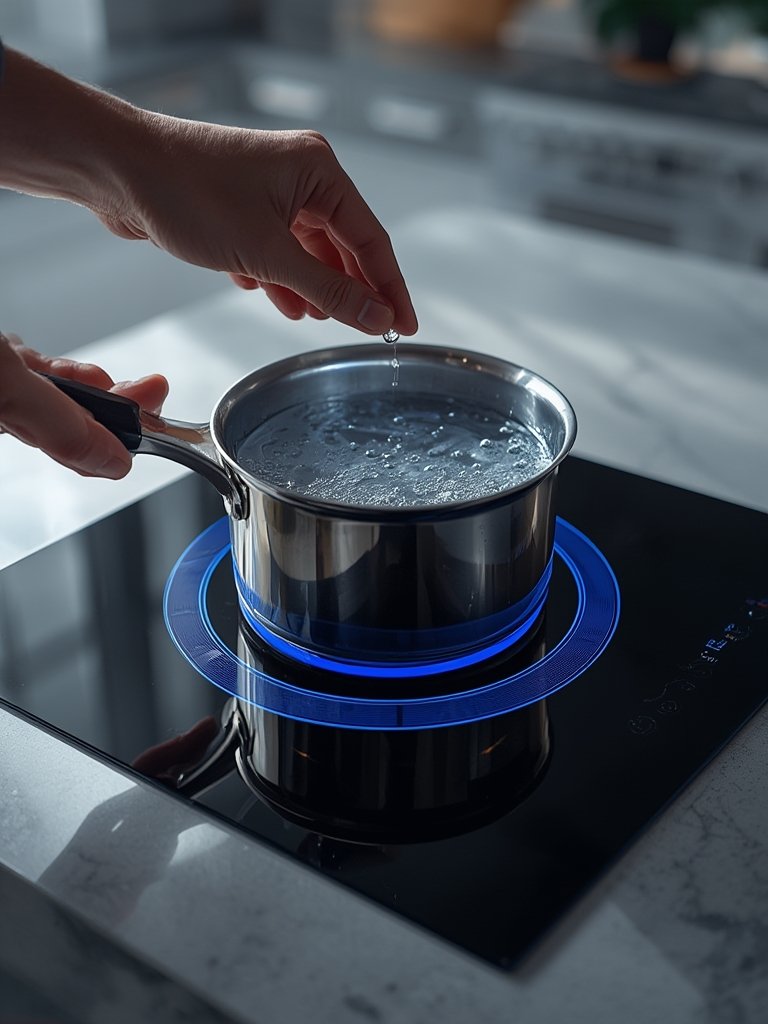
Step 5 : Use Correct Cooking Settings .
Induction cooktops respond instantly—avoid setting the power too high unless boiling water. Start low for delicate foods and increase gradually to prevent food from burning or the pot warping due to sudden heat.
Step 6 : Clean & Maintain Regularly .
Let induction pots cool before washing to prevent warping. Clean with mild soap, no abrasive pads (unless the manual allows). This prolongs life and keeps performance strong. If unsure, consult the brand’s user guide.
For optimal kitchen efficiency, see our top 10 kitchen organization tools that pair well with induction cookware.
Step 7 : Store Correctly .
Store with lids off to prevent moisture build-up and odors. For stainless steel induction pots, avoid stacking heavy pots inside each other to preserve the flatness of the base.
Find more cleaning and maintenance strategies in our stainless steel garlic press guide—the advice often applies to all high-quality metal cookware.
Step 8 : Inspect for Signs of Wear .
Check for base warping, loose handles, or signs of separation in multi-layer pots. Discontinue use if the base is no longer flat; this can affect not only cooking results but also safety on high-powered induction burners.
Want even more essential tips? Explore the ultimate guide to stainless steel cheese graters for insight on quality in kitchen tools.
Pitfalls & Advanced Analysis for Buying Induction Pots :
The induction pot market is expanding fast, with competition among brands and regional differences in features and pricing (source). But shoppers and users often run into a few common problems:
Common Pitfalls When Choosing or Using Induction Pots :
- Incompatible Materials: Some pots labeled “stainless steel” are non-magnetic and won’t heat on induction surfaces. Always check with a magnet.
- Warped Bases: Thin or poor-quality bases can warp after repeated heating, leading to uneven results or the cooktop not detecting the pan.
- Lack of Certifications: There are no universal industry certifications for induction pots—look for reputable brands, warranty coverage, and verified “induction-friendly” markings.
- Size Mismatch: Using pots that are too small or oversized for the induction element can cause inefficient heating or cause the safety cut-off to trigger.
- Price Confusion: Prices vary widely for induction pots, depending on brand, material quality, multi-ply construction, and included lids. Many brands price higher for “premium” options even when performance is similar (source).
- Warranty Gaps: Many brands are silent or vague about warranty and after-sales service for induction pots in 2024, so check return policies before buying.
| Feature | Induction Pot | Traditional Pot |
|---|---|---|
| Heating Method | Magnetic (direct) | Thermal transfer (indirect) |
| Energy Efficiency | High | Low to moderate |
| Cooking Speed | Faster | Slower |
| Safety | Cooler exterior, auto shut-off | Handles get hot, continuous heat |
| Compatibility | Requires magnetic base | Any base works |
If you want to optimize your workflow with more modern kitchen gadgets, take a look at digital kitchen scales for accurate cooking in our Complete Guide to Digital Kitchen Scales.

Conclusion :
An induction pot is not just a specialty item—it’s a practical upgrade for anyone who wants faster, safer, and more reliable home cooking. Always check for magnetism, base thickness, and brand reputation before you buy. With the global market expanding and more options available each year, investing in quality induction cookware is a smart, energy-efficient move. Ready to level up your cooking? Explore your best induction pot options and enjoy the next step in kitchen convenience.
FAQ :
How do I know if my pot is compatible with induction cooktops ?
Hold a magnet to the bottom of the pot. If it sticks firmly, the pot is induction compatible. Also look for the coil symbol or ‘induction ready’ label on the pot .
Can I use an induction pot on gas or electric cooktops ?
Yes, induction pots work on all cooktops (gas, electric, ceramic) as long as they have a magnetic base. Their versatility makes them useful for most kitchens .
Why does my induction cooktop sometimes not detect my pot ?
Common reasons: the pot base may be too small for the cooking zone, the base isn’t flat, or the material lacks proper magnetism. Check pot size and use a magnet to confirm compatibility .
Are there any industry certifications or standards for induction pots ?
As of 2024, there are no global industry certifications specific to induction pots. Always buy from reputable brands and look for verified “induction compatible” labeling for assurance .
What is the main advantage of using induction pots over traditional pots ?
Induction pots heat up faster, use less energy, and offer more precise heat control. They also keep your kitchen cooler and safer during cooking .
[…] For further clarity on choosing induction-compatible cookware, you can check out our detailed induction pot buying guide. […]
[…] performance on LG induction, use flat, heavy-bottomed pots and pans. Not sure which to buy? See our Induction Pot Buying Guide. 🔥 Hacks & Tricks: Want easier cleaning? Use LG’s EasyClean® steam cycle after messy […]