

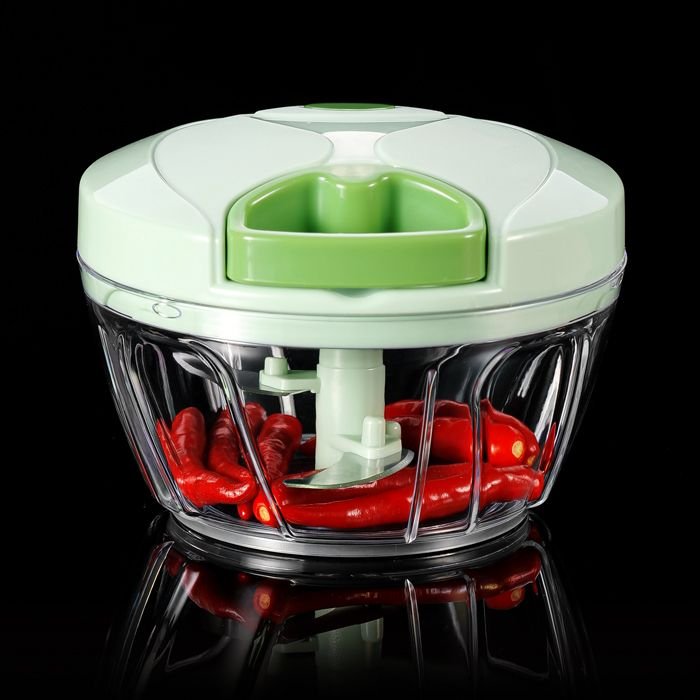
Manual food choppers are indispensable kitchen tools that streamline meal preparation, making chopping, slicing, and dicing vegetables and other ingredients effortless. In an age when efficiency and healthy home cooking matter, understanding how these simple yet effective devices work, their advantages, and how to choose the right one can transform your culinary experience.
Table of Contents
What Is a Manual Food Chopper and How Does It Work
A manual food chopper is a simple yet ingenious kitchen tool designed to make food preparation faster, easier, and more efficient without the need for electricity. Unlike electric food processors or the traditional reliance on kitchen knives, a manual food chopper relies on your own hand power to chop, dice, mince, or blend a variety of ingredients. At its core, the device typically consists of a sturdy container or bowl, razor-sharp rotating blades, and an activation mechanism—most commonly a hand-pull cord, plunger, or lever. Some versions use a zigzagging blade attached to a lid that, when pressed or twisted, chops food inside the container.
The main functions of a manual food chopper revolve around breaking down ingredients into smaller, uniform pieces. Depending on the design, you can achieve anything from coarse chops to fine minces, giving you absolute control over the result. In contrast to electric food processors—which require power outlets, intricate assemblies, and time-consuming cleaning routines—manual choppers offer instant usability and easy maintenance. Traditional knives, meanwhile, demand precision, skill, and physical effort, often resulting in uneven cuts and greater risk of accidents.
Manual food choppers commonly employ either a string-pull mechanism that spins the blades rapidly, or a plunger system that activates chopping blades with repeated downward motions. These methods allow for quick chopping of vegetables, fruits, herbs, nuts, cooked meats, and even cheese. Foods best suited for manual chopping tend to be firm but not excessively hard—think onions, garlic, tomatoes, carrots, peppers, and apples. With a manual device, you have full control over how finely or coarsely foods are chopped, simply by varying the number of pulls or plunges.
Distinct advantages come from the manual operation: unmatched portability since there’s no need for cords or batteries, precise control over the chopping process, and complete energy efficiency. This makes manual food choppers valuable for any kitchen, from space-conscious apartments to outdoor settings like picnics or camping trips.
Key Advantages of Using a Manual Food Chopper
A Manual Food Chopper offers several key advantages that make everyday meal prep faster and more convenient. One of the biggest benefits is time-saving performance. With just a quick pull, push, or twist, vegetables, fruits, nuts, and herbs are chopped into uniform pieces far more quickly than using a knife. For anyone who prepares ingredients for salads, sauces, or stir-fries daily, a Manual Food Chopper helps streamline repetitive tasks and frees up valuable time.
Another major advantage is improved consistency. A Manual Food Chopper uses multiple sharp blades that work together to create evenly sized cuts. This uniformity ensures ingredients cook more evenly, which is especially important for recipes where texture matters. Unlike hand-chopping, which can lead to uneven pieces, a Manual Food Chopper delivers reliable and predictable results every time.
Safety is also a strong reason many home cooks prefer this tool. Because the blades are enclosed inside the chopper, there is far less risk of accidental cuts. This makes a Manual Food Chopper a safer option for beginners, seniors, or households with children who occasionally help in the kitchen.
Cleaning is another area where these tools shine. Most Manual Food Chopper models come apart easily and have detachable components that rinse clean under running water. Many parts are even dishwasher-safe, making cleanup fast and hassle-free.
Since a Manual Food Chopper requires no electricity, it offers flexibility and portability. Its compact size makes it ideal for small kitchens, RVs, dorm rooms, or camping trips. This combination of efficiency, safety, and convenience is why many people consider a Manual Food Chopper an indispensable tool for busy lifestyles.
Comparing Manual and Electric Food Choppers
When comparing a Manual Food Chopper to an electric model, it’s important to evaluate how each option fits your kitchen needs. Versatility plays a major role in this choice. A Manual Food Chopper gives you full control over chop size and rhythm, making it great for vegetables, herbs, nuts, and softer fruits. Electric choppers handle larger volumes and tougher ingredients but may over-process delicate foods, limiting your ability to create chunky cuts or gentle mincing.
Speed is another key factor. Electric units process big batches quickly, especially dense ingredients like nuts or carrots. A Manual Food Chopper, however, excels with small to medium quantities and delivers precision without risk of over-chopping.
Reliability and durability strongly favor manual tools. A Manual Food Chopper has fewer moving parts and no motor, meaning fewer breakdowns and no electrical issues. Electric choppers can experience motor burnout, malfunctioning buttons, or require access to an outlet, making them less dependable over time.
Cost is also worth considering. A Manual Food Chopper is usually more affordable upfront and carries a lower risk of costly repairs. Electric choppers often require a higher initial investment and may need replacement parts after extended use.
Maintenance creates another distinction. A Manual Food Chopper typically disassembles easily and is simple to wash by hand or in a dishwasher. Electric choppers have more components and sensitive electronics that require careful cleaning.
Choose a Manual Food Chopper if you want quick prep, better control, portability, and a hassle-free experience—ideal for anyone who values simplicity or has limited space. Electric choppers are better suited for heavy, repetitive tasks where speed takes priority. Many home cooks prefer the tactile feel and low-tech dependability of manual tools, while others rely on electric models for high-volume work despite their larger footprint and more complex upkeep.
How to Choose the Best Manual Food Chopper for Your Needs
Selecting the perfect manual food chopper for your kitchen involves more than just picking a model based on looks or price. First, assess the quality of the blades. *Stainless steel blades* are highly recommended for their sharpness and resistance to rust, ensuring they stay efficient with regular use. Check if the chopper offers multiple blade configurations – for example, interchangeable discs or multi-layered designs – which increases functionality for chopping, dicing, or even mixing.
Next, consider the build material of both the bowl and the lid. **Durability is crucial**, especially for daily use. Look for BPA-free, high-impact plastics or reinforced glass containers, which provide strength without imparting flavors or odors to your food. Examine the locking mechanisms and hand grips; ergonomic, non-slip designs make repetitive chopping safer and more comfortable.
Size matters as well. For solo cooks or small households, compact models save counter and storage space. For families or meal prepping, larger capacity choppers minimize the need for multiple rounds of chopping. Portable, lidded bowls are a bonus for on-the-go use or direct refrigeration.
Value for money is not just about price. Accessories such as egg separators, cleaning tools, or extra blades can enhance versatility and justify a slightly higher cost. Shortlist brands known for quality manufacturing and positive customer service; reputable names often back products with warranties, which is an indicator of durability confidence.
When narrowing your options, *read user reviews*, focusing on feedback about ease of assembly, real-world durability, and replacement part availability. Take note of any recurring issues, such as difficult cleaning or blade dulling, as these can impact long-term satisfaction. Finally, understand the warranty policy: a clear, long-term warranty provides peace of mind and saves trouble if any component fails unexpectedly.
Care, Maintenance, and Creative Uses for Your Manual Food Chopper
Routine care and maintenance help extend the lifespan and performance of your Manual Food Chopper. Always begin by fully disassembling the unit before cleaning. Most models include a bowl, lid, blade assembly, and sometimes a pull-cord or plunger system. To disassemble safely, remove the lid first, then carefully lift the blade assembly by its plastic hub—not the sharp edges—to avoid accidental cuts. If your Manual Food Chopper has a removable cord or plunger, detach these parts according to the manufacturer’s instructions.
Rinse all components immediately after use to prevent food from drying on the surfaces. Wash the bowl and lid with warm, soapy water, and use a soft brush to clean the blades without dulling them. Many parts of a Manual Food Chopper are top-rack dishwasher safe, but always check the user manual to confirm. After cleaning, make sure each piece is completely dry before reassembling or storing the chopper to prevent rust or mold.
A Manual Food Chopper isn’t limited to onions or basic prep work. You can use it to make chunky salsas, quickly chop nuts for baking, or mince herbs without bruising them. It’s also great for grating cheese, preparing baby food, or turning day-old bread into fresh breadcrumbs. For fast breakfasts, blend eggs, herbs, and vegetables into a ready-to-cook omelet mix. You can even pulse parsley, garlic, and oil to create chimichurri, or chop cabbage and carrots for instant coleslaw.
Don’t hesitate to experiment. A Manual Food Chopper can blend frozen fruits for smoothie bowls or chop dates, oats, and nuts for homemade energy bites. Its versatility makes it an essential tool for daily cooking and creative recipes alike.
Conclusions
A Manual Food Chopper offers an efficient, affordable, and versatile solution for simplifying everyday cooking routines. By understanding its strengths and proper care techniques, anyone can take full advantage of this practical kitchen tool.
Whether you’re preparing quick meals, experimenting with new recipes, or looking for healthier homemade options, a well-chosen Manual Food Chopper adds convenience without sacrificing quality. With the right model, you can enjoy faster prep, less hassle, and more creativity in your food preparation.
For even more ways to upgrade your kitchen workflow, explore our Kitchen Tools category to find additional essentials that enhance precision, speed, and creativity.
[…] drinks or desserts often, consider pairing your ice maker with other essential kitchen tools like a manual food chopper or ice cream maker for a full home bar or dessert […]
[…] Compared to refrigerator repairs or built-in replacements, a countertop ice maker is usually far less expensive and requires no dedicated plumbing. This makes it an obvious choice for renters, travelers, small families, and those wanting flexibility—or backup for busy kitchens or outdoor entertaining. Want to dive deeper into other vital kitchen tools? See how manual food choppers are transforming effortless prep in our Manual Food Chopper Buying Guide. […]
[…] paired with the right accessories can help you prep ingredients much faster. For example, using a manual food chopper or mortar and pestle alongside induction can seriously speed up both prep and […]
[…] for a truly clutter-free cooking zone. Upgrading tools such as a stainless steel garlic press or manual food chopper can also save you time during every meal prep […]
[…] deeper food-prep tools, see our related guides like the Ultimate Guide to Mortar and Pestle Sets or Manual Food Choppers for hands-on kitchen […]
[…] hands-on tools, you may enjoy our Ultimate Guide to Mortar and Pestle Sets for kitchen prep, or our Manual Food Chopper roundup—both focus on fresh flavor and workflow, echoing the core appeal of single […]
[…] a quality drain mat pairs perfectly with tools like a stainless steel colander for rinsing, or a manual food chopper when prepping vegetables directly over the […]
[…] for more smart kitchen tips? See our guides on tools like the stainless steel dough scraper, manual food chopper, and kitchen organization tools to level up your meal […]
[…] your kitchen for parenthood, you might also check out guides for other essential tools, like manual food choppers or salad spinners for meal […]