

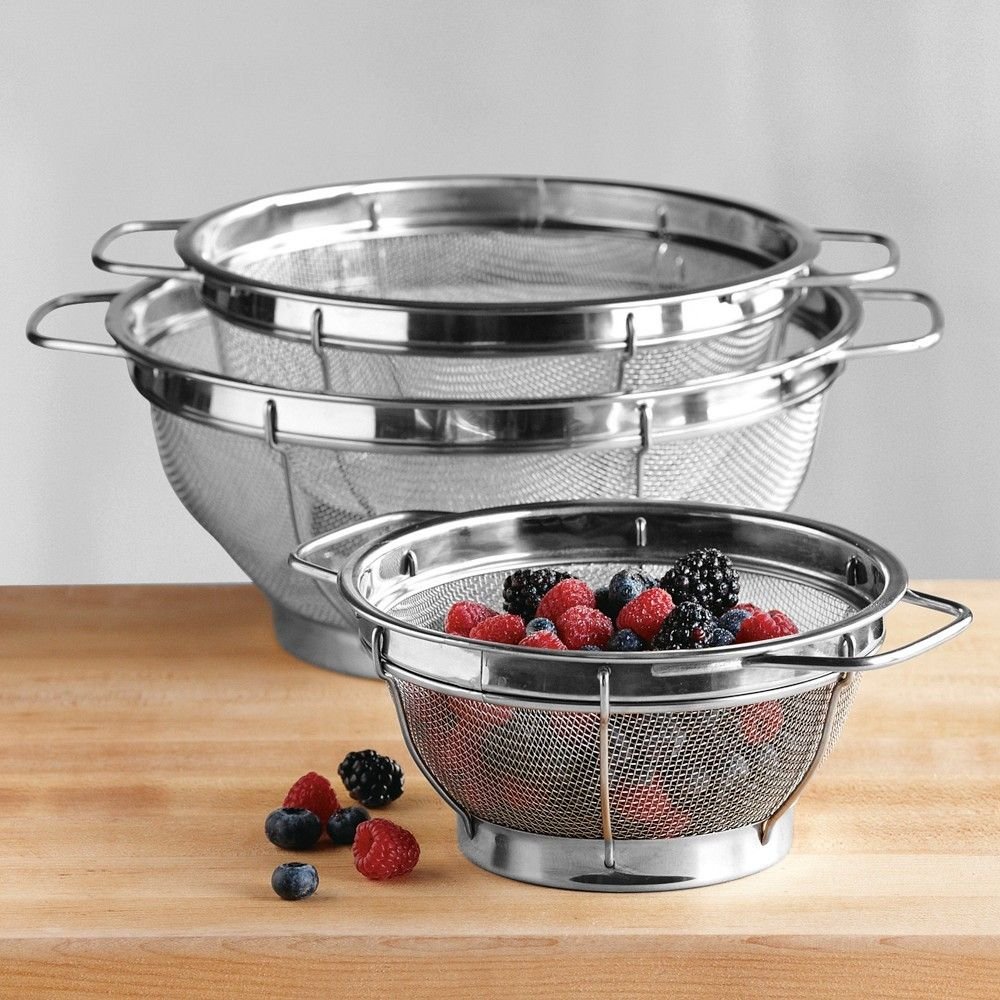
Stainless steel colanders are essential kitchen utensils designed for straining, rinsing, and draining various foods. With their robust material and practical design, these colanders are favored by professional chefs and home cooks alike. In this guide, we delve deep into the features, benefits, and practical applications of stainless steel colanders to help you make the best use of this indispensable kitchen tool.
Table of Contents
Understanding the Stainless Steel Colander
The stainless steel colander is an essential kitchen tool, renowned for its unparalleled ability to strain liquids from foods with efficiency and reliability. The word “colander” traces back to the Latin verb “colāre,” meaning “to strain” or “to filter,” a fitting etymology that directly reflects its primary function. Colanders have evolved from ancient tools made of clay or woven fibers into the versatile utensils we depend on today, with stainless steel representing the pinnacle of modern advancement.
Colanders, sieves, and food mills are often mistaken for each other, but their designs and purposes diverge in subtle yet critical ways. A colander is typically a bowl-shaped vessel perforated with numerous holes, intended for draining cooked pasta, rinsing vegetables, or washing rice. In contrast, sieves use a fine mesh screen to separate finer solids from liquids or sift dry ingredients, making them ideal for removing seeds from sauces or aerating flour. Food mills are more complex, combining a perforated plate with a hand crank to puree or mash foods while simultaneously straining.
Stainless steel’s rise as the material of choice for colanders is no accident. Unlike older materials that absorb flavors or rust over time, stainless steel is valued for its strength and non-reactive nature.
Its moisture-resistant surface prevents corrosion, even when the colander is left damp in the sink or exposed to acidic foods. This makes stainless steel far more reliable than porous or rust-prone alternatives.
Another major advantage is hygiene. The smooth stainless steel surface resists stains and bacterial buildup, making cleaning quick and effortless—an essential benefit in busy kitchens.
The rigid construction also ensures the colander won’t warp under the weight of heavy foods. It can handle both hot and cold temperatures without bending or degrading.
These combined qualities make stainless steel colanders a trusted staple for home cooks and professional chefs who value durability, cleanliness, and consistent performance.
Comparing Stainless Steel to Other Colander Materials
When comparing colanders, several materials dominate the market: stainless steel, plastic, silicone, and enamelware each bring unique qualities to the kitchen. Stainless steel, renowned for its exceptional durability, is often contrasted with these other materials based on longevity, hygiene, and performance. While stainless steel boasts unmatched resistance to staining, high temperatures, and physical stress, plastic colanders offer a lightweight, affordable alternative. Plastic is ideal for quick straining of pasta or rinsing berries, particularly when the workflow involves young cooks or concerns about dropping heavy utensils. However, over time, plastic is prone to warping, staining, and even absorbing odors, reducing its overall lifespan.
Silicone colanders, popular for their collapsibility, suit kitchens with minimal storage. Their flexibility makes them adept at draining blanched vegetables or small batches of fruit. While silicone is heat-resistant and easy to clean, it isn’t as rigid as stainless steel, making it less reliable for handling bulky or heavier foods such as potatoes. Silicone can also retain grease or colored residue with repeated use.
Enamelware, though attractive with vintage-inspired styling, features a core of metal coated with enamel. It is resistant to some forms of corrosion but may chip, exposing the underlying material and potentially leading to rust. This makes enamelware better for occasional rather than daily straining.
In contrast, stainless steel’s seamless nature discourages bacteria buildup, and its capacity to withstand repeated dishwashing and high-heat tasks makes it a hygienic choice, especially in busy kitchens handling raw and cooked foods interchangeably. It shines in scenarios requiring efficiency and cleaning between uses, such as large family meals or batch cooking. While plastics or silicone may suit casual or small-scale straining, stainless steel remains the definitive choice for longevity, cleanliness, and consistent kitchen performance.
Different Types and Designs of Stainless Steel Colanders
Cone-shaped colanders, or chinois, are specialized for finer straining tasks. Their tapered form channels liquids quickly and is exceptionally useful when making stocks, broths, or purees. The tightly spaced perforations of a chinois trap even the tiniest food particles, though they can slow water drainage during large-volume tasks compared to bowl shapes.
Another innovative design is the mated colander pot, where a fitted colander nests directly into a matching saucepan. This setup is ideal for cooks who regularly boil and drain foods like pasta or vegetables. It minimizes handling and reduces the risk of spills or burns, as you can simply lift the insert and drain in one motion.
Design details can greatly affect ease of use. Handles come in a variety of placements—side handles offer stability when pouring, while a single long handle provides leverage for one-handed straining. Perforation size matters: large holes speed up drainage but are not suited to fine foods, while smaller holes work for quinoa or rice but may retain water longer. The base style is also important—a pedestal base can elevate the colander, ensuring food stays out of drained liquid and making the colander more stable in the sink.
When choosing a colander, consider your cooking habits: for frequent pasta or potato cooking, a broad, sturdy colander with comfortable handles and medium perforations is ideal; for delicate rinsing or straining stocks, opt for a cone-shaped or fine-mesh stainless model. By matching design to your kitchen routines, you maximize both efficiency and versatility.
Best Practices for Using and Maintaining Your Colander
Using your stainless steel colander correctly is essential for effective straining and for extending the tool’s lifespan. When draining pasta, always stabilize the colander in the sink before pouring. Grip the handles firmly or position it over a wide, flat base to avoid tipping.
When rinsing vegetables or fruits, spread them evenly inside the colander. Gently agitate the produce to ensure every surface is exposed to clean water. For maximum drainage, avoid overfilling; allow water to move freely around all sides of the food.
If you’re draining boiled potatoes, pasta, or spinach, shake the colander lightly to remove excess liquid. This helps prevent steaming, which can make certain ingredients soggy.
To minimize spills, never crowd the colander near the rim. Pour food toward the center instead. For large quantities, work in batches to maintain full control. Remember that food safety is crucial—don’t leave perishable foods sitting in the colander at room temperature for too long.
Caring for your stainless steel colander involves routine cleaning after each use. Rinse it immediately to prevent food particles from hardening. Wash with warm, soapy water and use a non-abrasive sponge to avoid scratching the surface.
For stubborn stains, apply a baking soda and water paste and scrub gently before rinsing thoroughly. Although many stainless steel colanders are dishwasher-safe, handwashing helps preserve the finish over time.
Dry your colander completely before storing it to prevent water spots or mineral buildup. Store it in a dry cupboard, or hang it by its handle loops to improve airflow. Avoid harsh chemicals or bleach, as these can corrode the metal. Inspect the perforations regularly and remove trapped particles promptly to maintain hygiene and performance.
Creative Kitchen Uses and Hacks for Stainless Steel Colanders
A stainless steel colander is far more versatile than its basic role of straining pasta or rinsing produce might suggest. Its robust construction and perforated design open up a world of creative kitchen possibilities. In both home and professional settings, chefs and cooks have discovered a variety of alternative uses that extend the value of this simple tool.
*Steaming is a standout application known in professional kitchens.* Simply place your stainless steel colander over a pot of simmering water, fill it with vegetables or dumplings, and cover with a lid or foil. The colander’s holes allow steam to circulate evenly, while its sturdy build handles high heat, making it a reliable makeshift steamer when you don’t have specialized equipment.
*For sifting and shaking*, the colander’s broad surface area makes it ideal for tasks like dusting pastries with powdered sugar or draining rice evenly. Tossing foods, such as salad greens, inside the colander with a quick shake ensures even coating of dressings while leaving excess liquid behind.
*Colanders also double as a washing station.* Their raised base helps keep produce out of dirty sink water, and you can use them for quick defrosting of frozen foods—air flows through, and excess water drains away, speeding up the process.
*Non-food uses reveal the colander’s adaptability.* In some kitchens, they’re repurposed as organizers for utensils or lids. At home, a colander becomes a berry basket for picnics, a shell strainer for beach trips, or even a rustic fruit bowl on the countertop. Some crafty individuals have transformed stainless steel colanders into unique hanging planters thanks to their ready-made drainage.
These inventive uses not only maximize efficiency and organization in the kitchen but also underscore the enduring, multi-functional value of a good stainless steel colander. By looking beyond its intended purpose, you add both practical and creative dimensions to this essential kitchen staple.
Conclusions
Stainless steel colanders excel in durability, versatility, and ease of maintenance, making them a smart addition to any kitchen. By understanding their types, choosing the best material, and practicing proper care, you can maximize your kitchen efficiency. Exploring creative uses further enhances their value, ensuring this tool stays indispensable for any cook.
For even more ways to upgrade your kitchen workflow, explore our Kitchen Tools category to find additional essentials that enhance precision, speed, and creativity.
[…] systems for leftovers and perishables. For accessible organization, check practical tools in our Stainless Steel Colander guide and Rolling Pin guide as […]